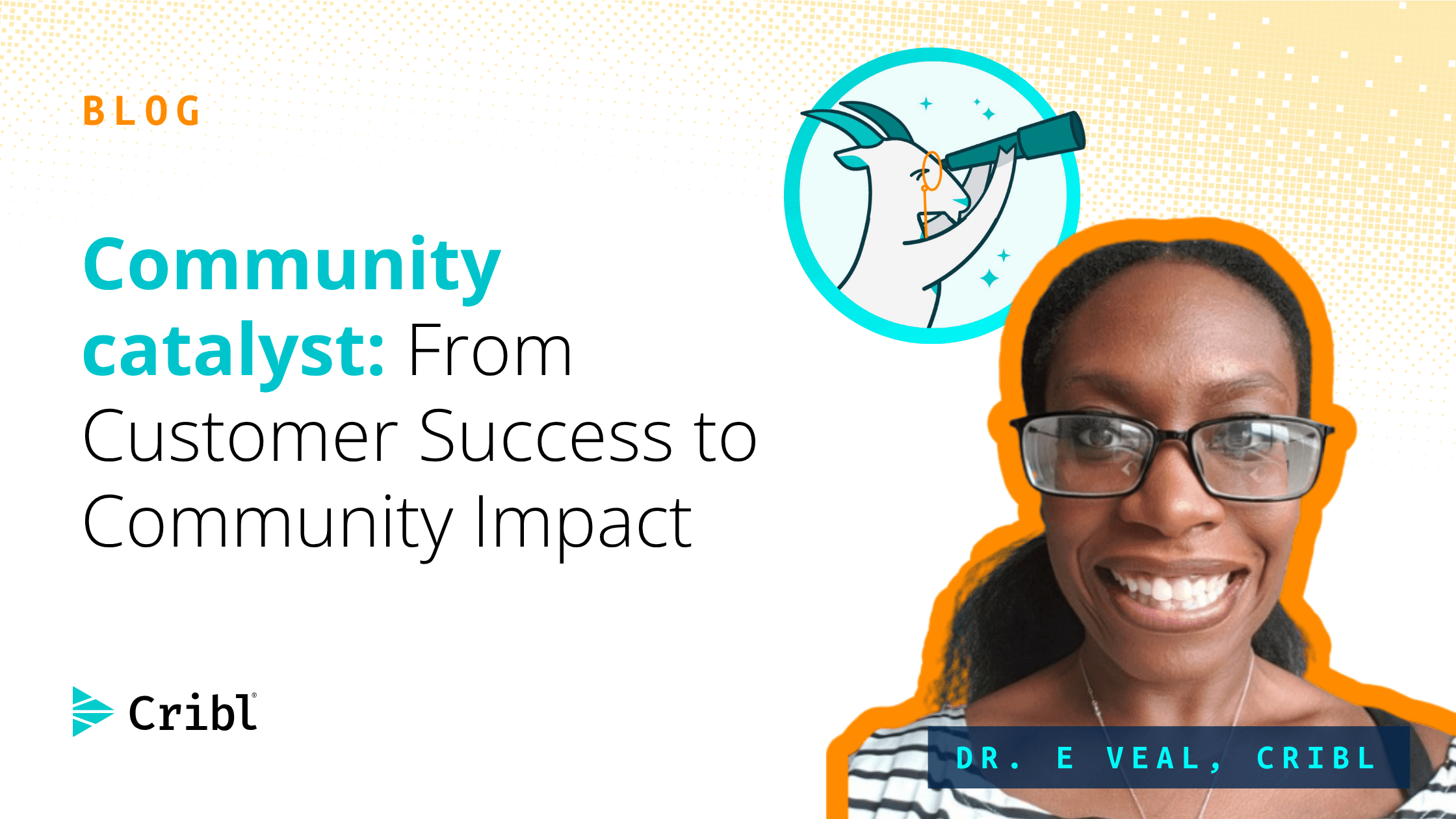

There's a career philosophy called the Tarzan Method, where non-linear career moves reveal new roles, environments, and preferences, shaping a unique career path. These seemingly non-sequential career moves provide you with the skills and experiences you need to increase your long-term potential.
My career has never taken a straight line. From high school geometry teacher to Nuclear Engineer to Systems Engineer to Cloud Architect to Customer Success Engineer, now Community Impact Program Manager.
This last move may seem disconnected, but arriving felt like a destination.
The work was already happening
Long before my title changed, I was doing community work. Not because anyone asked. Because I couldn't help it.
I invited local Cribl engineers and developers to public sector customer user groups so they could hear firsthand how customers were using what we built. I was mentoring peers who are early in their careers. Creating space for the kinds of conversations that didn't fit neatly into a monthly sync.
Quarterly, I organized breakfast meetups for employees in the DMV area. Once during a Baltimore breakfast, our Technical Alliance Director mentioned a partnership strategy he'd been developing. Across the table, someone from our Account Team leaned in. That strategy landed perfectly with a customer they'd been working with– giving our customer a first-in-class experience!
That connection didn't happen in a meeting room. It didn't happen on a structured call. It happened over bagels and lattes, in a room full of colleagues who knew each other as people — not just functions on an org chart. That's what community unlocks.
Outside of Cribl, I'd been doing the same. As a member of Delta Sigma Theta Sorority, Inc., I have led and created programs that support Black women and girls at the local, regional, and national levels. Through Black Girls Code, I've empowered the next generation with the tools and skills needed to navigate a career in tech. Community has never been a side project for me. It's been the through-line the whole time.
When I got quiet and honest with myself about what I'm genuinely passionate about, the answer was simple: bringing people together. Building community. I realized it's what I'd been building all along. What Cribl gave me was the organizational context — and the trust — to do that work at scale.
What a generational company looks like up close
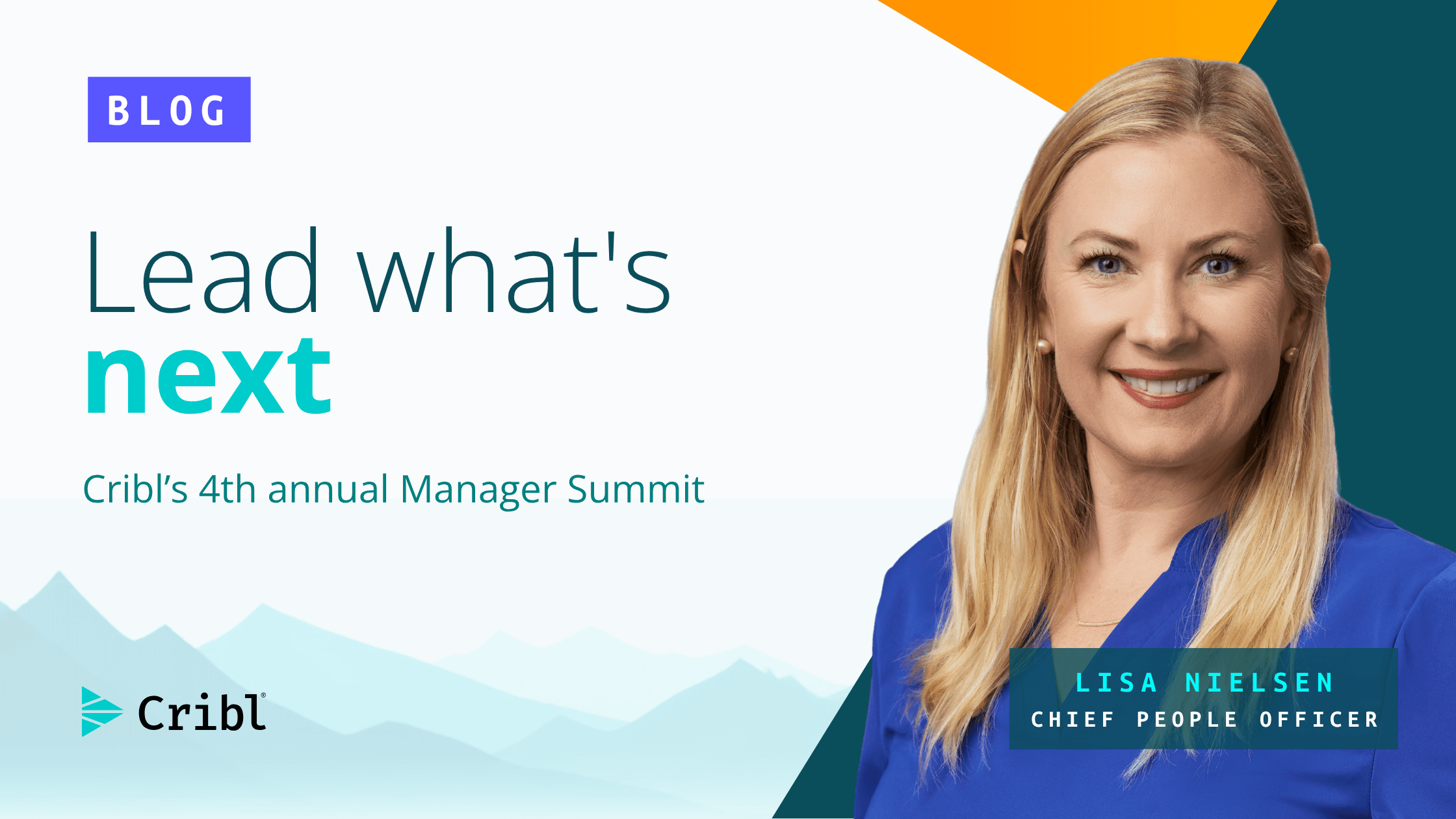
Cribl is building a generational company—something designed to outlast any one person or product cycle. Our Chief People Officer, Lisa Nielsen, wrote about this directly: Cribl's approach to Culture on Purpose is about intentionally evolving culture as the company grows, embedding values into how we hire, develop, and recognize people — not just what we ship.
My story is that philosophy in action.
Cribl has an internal career development program that offers employees the chance to rotate into other teams. This internal rotation opportunity gave me the chance to step outside my CSE role and work with the Internal Communications team, helping standardize how we communicate across the company. It was systems work– the kind that shapes how a culture actually operates. I came back with a broader view of Cribl, and Cribl got a clearer view of what I could do.
Co-leading Black Leaders at Cribl (BL@C) deepened that experience through real leadership development—building programs without a playbook, earning trust without authority, and navigating hard conversations with care. Those are the exact muscles my new role demands every day.
This is also what women's history looks like up close. Not just the visible milestones, but the women who quietly built the systems, held the relationships, and created the conditions for others to thrive. Lisa's blog discusses operationalizing values—turning them into measurable behaviors. That is the kind of community work that so many women do instinctively. That is the value. My new role makes it official.
Cribl didn't simply hand me the Community Impact Program Manager role; they created the conditions for me to grow into it. That distinction matters.
The week that summed it all up
For me, the icing on the Cribl cake was: the same week I started as Community Impact Program Manager, I defended my dissertation!
Completing my PhD in Organizational Diversity, the study of how institutions can create environments so everyone can do their best work, prepared me to help scale Cribl's culture through community. Although the timing wasn't planned, it felt like the universe was saying: My research isn't adjacent to my role. It is my role.
Women have always brought their whole selves to the work — their education, their community ties, their lived experience. The question is whether the institutions around them are paying attention. Cribl pays attention.
What I'm here to build
My job is to build a community culture at Cribl — one where we're empowered to co-create solutions and do our best work for our customers, our community, and each other.
That's not a tagline. It's a design challenge — and it's the practical expression of what Lisa describes as Culture on Purpose. Culture doesn't scale by accident. It scales when people are empowered to build it intentionally, from the inside out.
Come build with us
We're building something at Cribl that's meant to outlast any single program or product cycle. A culture with real structure. A community that connects our employees to our customers and to the world beyond our walls. A culture where people can grow into their strengths and do their best work.
That takes time. It takes intention. And it takes a company that believes culture is an operating system, not a perk.
If that sounds like a place you want to grow — we're hiring. Come find your next vine at cribl.io/careers.