
Document purpose:
This guide explains how Cribl, the AI Platform for Telemetry, helps organizations use a shared telemetry foundation to give IT and Security teams the power to collect, process, store, search, and analyze data at scale—while enabling AI agents and purpose-built applications to work from the same trusted data.
Read on to explore Cribl’s platform capabilities, architecture, benefits, and deployment options.
Executive summary
Most teams are drowning in telemetry but starved for insight.
Data volumes are growing, AI workloads are creating new streams of machine-generated activity, and every team is being asked to do more with the tools and infrastructure it already has. At the same time, telemetry is scattered across observability platforms, security tools, cloud services, and data lakes—making it expensive to move, difficult to govern, and hard to investigate.
You should not have to choose between visibility, cost, and flexibility.
Cribl is the AI Platform for Telemetry: an AI-native, shared telemetry foundation for IT and Security. Cribl helps you collect, shape, route, store, search, and analyze telemetry wherever it lives—so humans and AI agents can work from the data and context they need without locking you into one vendor or duplicating infrastructure for every solution.
With Cribl, teams can use the solutions they need, replace the ones they have outgrown, and build workflow-fit apps on the same foundation. The result is faster investigations, lower cost and complexity, and the choice, control, and flexibility to build what comes next.
Solution overview
The Cribl platform is built around a simple idea: give you control over your telemetry and the freedom to use it your way.
Cribl provides a shared foundation for collecting, processing, storing, searching, and analyzing telemetry across hybrid, multicloud, and federated environments.
You decide which capabilities and solutions fit your organization. You control where data goes, how it is shaped, where it is stored, and which teams, tools, apps, and agents can use it.
Cribl Stream optimizes data in motion so you can route, enrich, and transform telemetry efficiently.
Cribl Edge brings those capabilities closer to where data is created, to cut latency and network cost.
Cribl Lake provides open-format storage for low-cost, long-term retention, making it easy to store, manage, and access data.
Cribl Search gives teams a unified search and investigation experience to query all telemetry data wherever it lives, without first moving or rehydrating it.
The platform also includes app-building capabilities that let teams create tailored apps, interfaces, and visualizations on top of shared telemetry and Cribl APIs. That means teams can build around the way they work instead of forcing their workflows into vendor-defined applications or standing up another disconnected application stack.
Together, these capabilities give you a shared telemetry foundation for today’s solutions and tomorrow’s AI-driven workflows, while preserving your existing investments and keeping your data open and reusable.
Solution architecture
Cribl’s architecture meets you wherever your telemetry lives: on endpoints, in transit, in existing tools, in object storage, and across external data stores.
Stream and Edge collect, process, and deliver observability, security, and application telemetry in real time to the destinations you choose. Lake provides open-format storage for long-term retention, while Search unifies investigation across data at the edge, in flight, in Cribl Lake, and in external systems.
On top of this shared foundation, teams can use Cribl solutions or build tailored apps and workflow experiences. App-building capabilities connect those experiences to data through Cribl Search and APIs, so teams can use telemetry wherever it lives without rebuilding the collection, routing, storage, and analysis layers underneath each app.
This decoupled architecture helps you:
Support multiple solutions and workflows on shared infrastructure.
Give humans and AI agents access to a broader, more complete view of telemetry.
Govern data access and usage consistently across solutions and apps.
Add, replace, or extend tools without trapping telemetry in a proprietary stack.
Build new experiences as needs change without creating another data silo.
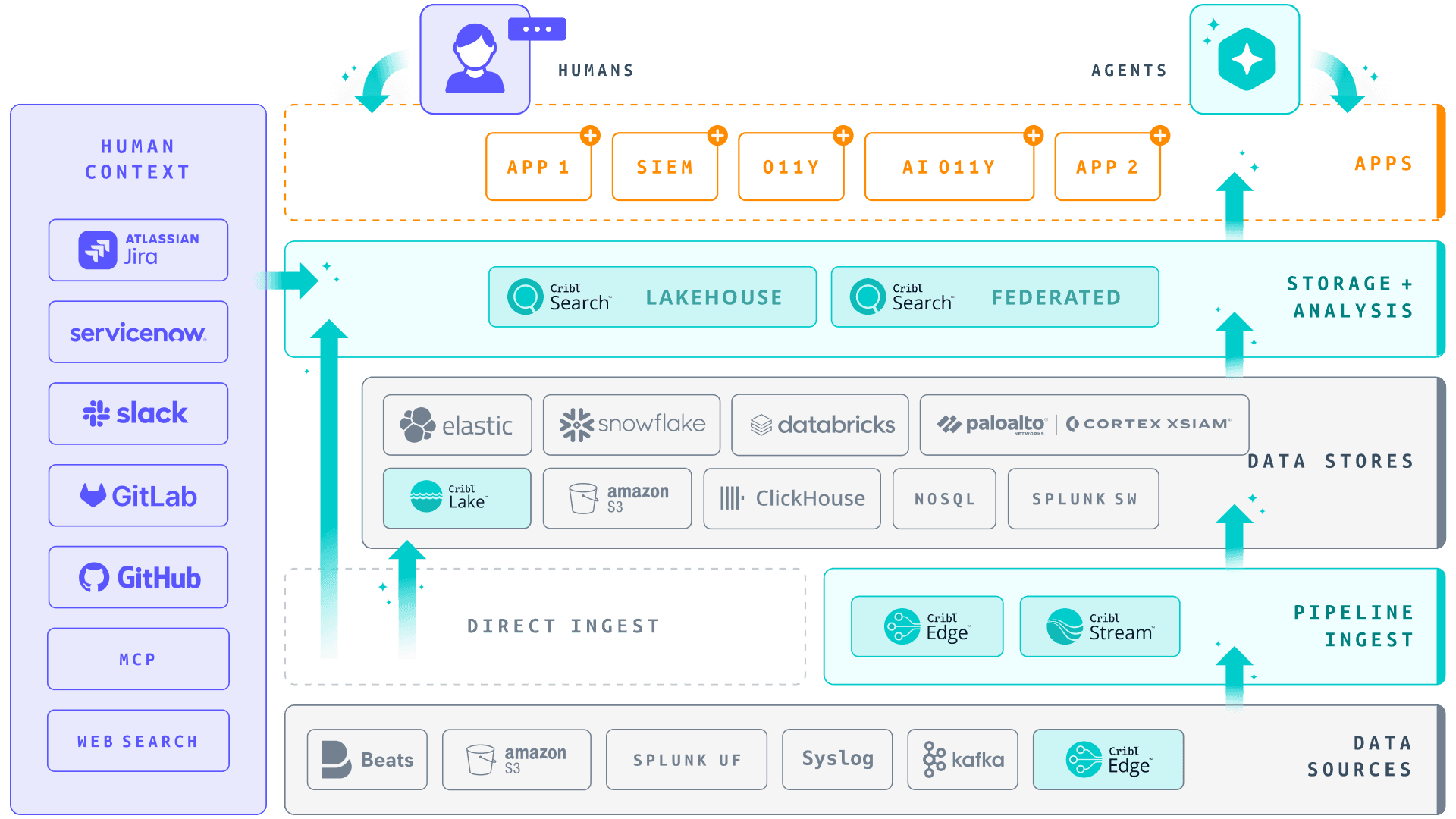
Fig. 01: High-level solution architecture.
Solution benefits
AI-ready telemetry foundation: Prepare telemetry for human and AI-driven analysis without re-architecting your environment.
One shared foundation, many solutions: Support multiple tools, teams, apps, and workflows without re-buying the infrastructure beneath each one.
Workflow-fit experiences: Build tailored apps, interfaces, and visualizations around the way your teams work.
Complete control over your data: Route telemetry where it has the most value, control access to sensitive data, and keep data open and reusable.
Faster investigations: Search across data wherever it lives and combine machine telemetry with the context teams need to understand what happened and why.
Lower cost and complexity: Reduce unnecessary movement, duplication, storage, and tool-specific management overhead.
Future-proof choice: Adopt new tools and AI capabilities on your terms without replacing the foundation or locking your data into one vendor’s stack.
Product overview
Cribl Stream
Functionality
Cribl Stream is a telemetry pipeline that lets teams route, shape, restructure, and enrich data from any source to any destination without adding new agents.
With Stream, teams gain control over data in motion and simplify IT and security workflows so they can instrument more, analyze more, and pay less.
Customer needs addressed
Stream helps teams:
Intelligently route, reduce, and enrich data.
Make noisy, high-volume streams manageable and insightful.
Cut waste while preserving what matters for security, operations, and business analytics.
The result is data that is not just abundant, but useful and actionable.
Cribl Edge
Functionality
Cribl Edge is a highly scalable, edge-based data collection system for logs, metrics, and application data. It collects and processes data in real time from Windows and Linux machines, applications, and microservices, then delivers it to supported destinations.
Customer needs addressed
Edge brings processing closer to where data is created, enabling:
Lower latency and smarter use of network resources.
Reduction, transformation, and routing before data travels.
Scalable collection with centralized management and visibility.
Edge provides local autonomy with central control.
Cribl Search
Functionality
Cribl Search is an AI-powered search and investigation experience. It gives teams one interface and one query experience across telemetry wherever it lives—whether data is ingested into Cribl Search for high-speed analysis or queried in place in external systems.
Customer needs addressed
Search reshapes data exploration by enabling teams to:
Investigate data anywhere: Search across hot, cold, ingested, and external data from one interface without unnecessary movement or rehydration.
Get data investigation-ready faster: Ingest directly into Search, use automatic parsing, and reduce the pipeline and schema work required before analysis.
Accelerate investigations with AI: Start with a question and let AI guide exploration, retrieve relevant data, generate queries, and summarize findings.
Make investigations accessible to more teams: Lower the dependence on specialized query experts while preserving powerful workflows for experienced analysts.
Cribl Lake
Functionality
Cribl Lake is a central hub for storing, managing, and accessing large volumes of data from many sources. Data can be directly ingested into Lake, or stored via the Stream integration. Teams can replay data to downstream destinations with minimal friction when the need arises.
With Lake and Search together, teams can:
Query data at rest in Cribl Lake.
Search across other data lakes, object stores, search APIs, and analytics platforms.
Use federated search to query multiple stores at once for faster investigations and time to value.
Customer needs addressed
Lake supports long-term, cost-effective data retention and analysis by enabling teams to:
Keep data in open formats without constantly moving or rehydrating it.
Support historical analysis, compliance, and security investigations with a consistent storage strategy.
Provide a unified platform for ingestion, processing, and long-term storage so insights are not stranded.
Lake provides durable, accessible data that retains its value over time.
Apps
Functionality
Cribl’s app-building capabilities let teams build and run tailored apps, interfaces, and visualizations on top of shared telemetry and analysis layers.
Teams can connect workflow experiences to data wherever it lives through data and APIs. With AI-assisted development, standard web tooling, scaffolding, and live preview, teams can create useful experiences faster while keeping the data layer decoupled from the interface layer.
Apps are part of the Cribl platform. They extend the value of the shared telemetry foundation rather than creating a new, disconnected application stack.
Customer needs addressed
Apps help teams:
Build around their workflows instead of adapting workflows to vendor-defined applications.
Turn multi-step operational processes into guided, repeatable experiences.
Serve more teams from the same governed telemetry foundation.
Reduce bespoke engineering and the backlog of one-off tooling requests.
Reuse shared data, search, APIs, and platform capabilities across multiple experiences.
Deliver new telemetry-driven workflows without rebuilding the data foundation underneath them.
How it all works together
Stream and Edge collect and process telemetry close to where it is created. They route, reduce, enrich, and transform data for the tools and teams that need it, while Lake provides a durable, open-format destination for long-term retention.
Search connects the experience across data in motion, data at rest, and data stored in external systems. Teams can investigate in place, recall historical data when needed, and selectively forward only what is useful.
Cribl solutions and apps use this shared foundation to turn telemetry into practical workflows. A team can use a Cribl-built experience, install a partner experience, or build a tailored app for a specific operational or security need—without standing up a separate collection pipeline, storage layer, or governance model for every use case.
This is the platform advantage: collect and govern telemetry once, then use it across the solutions, apps, people, and AI agents that need it.
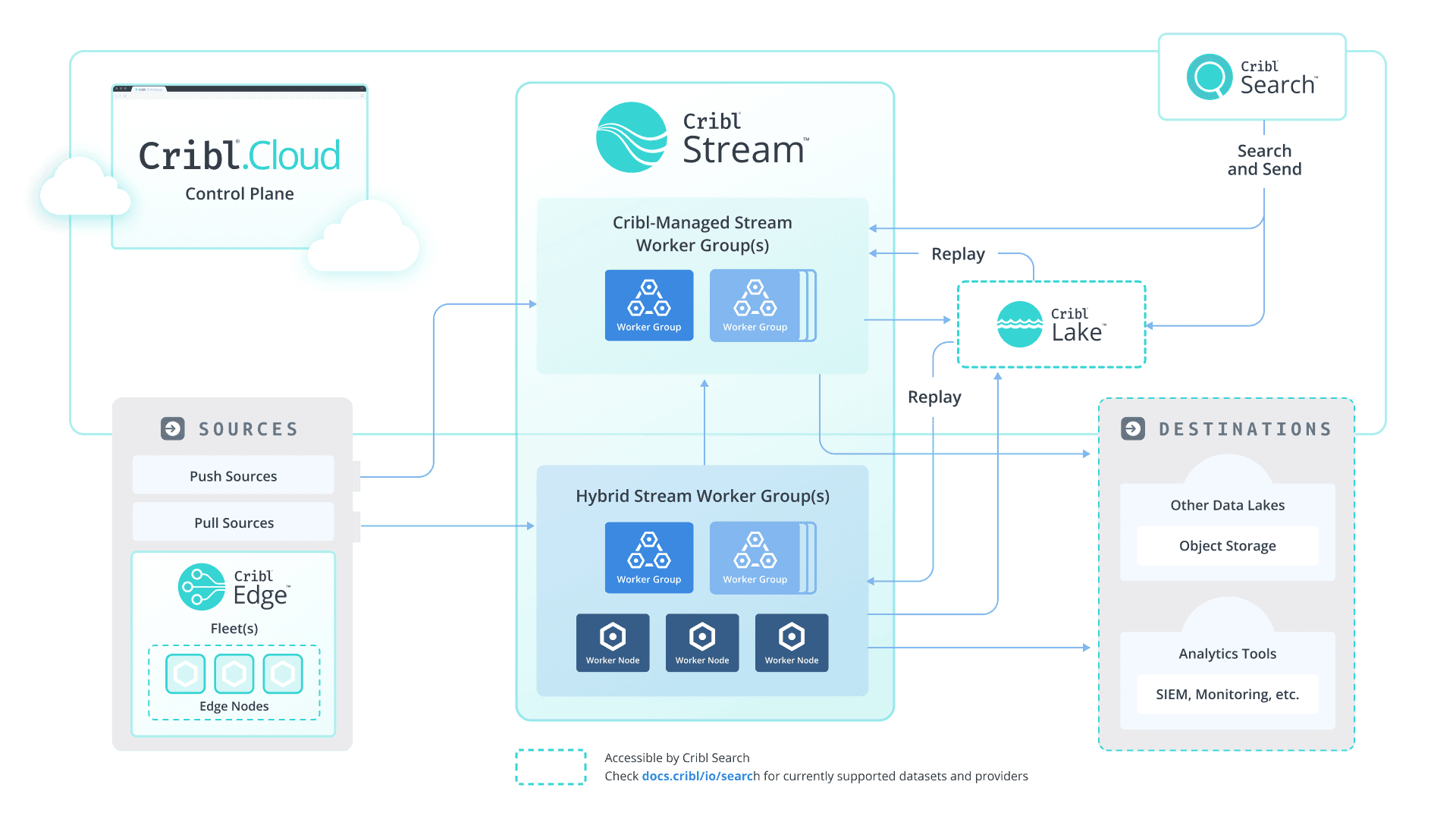
Fig. 02: Full-suite reference architecture
Platform services
Cribl extends the telemetry platform with services that help teams protect data, monitor operations, manage spend, and deploy in the environment that best fits their requirements.
Cribl Guard
Functionality
Cribl Guard helps organizations discover and control sensitive data across their telemetry environment. It uses intelligent detection to identify PII, secrets, and other sensitive information across varying data formats and structures, with built-in and custom rules for organization-specific requirements.
Guard can be applied within existing data-processing pipelines to mask, redact, or tag sensitive data before it reaches downstream tools. Monitoring gives administrators visibility into events and bytes scanned, detected data, and protection coverage.
Customer needs addressed
Cribl Guard helps teams:
Find sensitive data they may not know exists or where it flows.
Reduce exposure risk before data reaches downstream systems.
Support compliance and data-governance requirements at scale.
Apply consistent protection policies without creating a separate data-processing stack.
Adapt detection rules as data formats, regulations, and business needs change.
Cribl Insights
Functionality
Cribl Insights is an always-on, AI-ready monitoring layer for the Cribl environment. It continuously analyzes changes in data volume, quality, and shape, while bringing operational signals, data-processing behavior, user activity, and configuration changes into a centralized view.
Insights helps teams detect silent data loss, unexpected changes, pipeline issues, and downstream problems before they escalate. Actionable alerts can be delivered into Slack and other workflows so teams can move from reactive firefighting to proactive, AI-assisted control.
Customer needs addressed
Cribl Insights helps teams:
See what is happening across Cribl products and services from one place.
Detect partial data drops and anomalies that traditional availability checks may miss.
Understand why data-flow or configuration changes are affecting operations.
Reduce context switching across products and monitoring tools.
Give operators and AI agents trusted telemetry for faster, safer decisions.
FinOps Center
Functionality
Cribl FinOps Center gives teams financial visibility, accountability, and control over how their data is used and paid for. It provides a centralized view of Cribl Credit consumption across products, with granular reporting by product and usage area.
Teams can track usage trends over time, understand how engineering and data-management decisions affect consumption, identify optimization opportunities, and forecast future needs. This connects technical choices—such as onboarding new data, changing retention, or moving workloads—to business value and budget planning.
Customer needs addressed
FinOps Center helps teams:
Understand where Cribl Credits are being consumed across the environment.
Connect data usage and operational decisions to business value.
Identify waste, optimize workloads, and manage trade-offs before costs become surprises.
Forecast future consumption and plan for growth.
Create shared accountability across IT, Security, platform engineering, and Finance.
Solution deployment
Before you deploy
Choose a deployment model based on data volume and processing requirements. Consider:
Amount of data ingest per unit of time.
Amount of data collected and processed at endpoints.
Processing complexity, including transformations, parsing, masking, and obfuscation.
Whether data is routed or cloned to multiple destinations.
Connectivity constraints, including air-gapped or on-premises servers without internet access.
Common deployment types
Single-instance deployment: Appropriate when incoming data volume is low and processing is light.
Distributed deployment: Appropriate for higher loads or more complex processing.
Cribl.Cloud deployment: Launch a Cribl-hosted deployment of Stream, Edge, Search, and Lake while Cribl manages the underlying infrastructure.
Organizations can evolve from simple deployments to hybrid models over time without re-architecting the entire solution.
Deployment options
Cribl gives organizations the flexibility to choose a deployment model based on data residency, processing location, operational ownership, connectivity, and scale.
Cribl.Cloud
Cribl.Cloud is the fastest way to get started. Cribl hosts and manages the Cribl infrastructure, including deployment, scaling, upgrades, and patching, so teams can focus on using the platform rather than operating it.
Cribl.Cloud provides access to Cribl products and AI-powered capabilities through a managed experience. Enterprise plans support multiple Worker Groups, role-based access controls, notifications, and hybrid deployment patterns.
Hybrid deployment
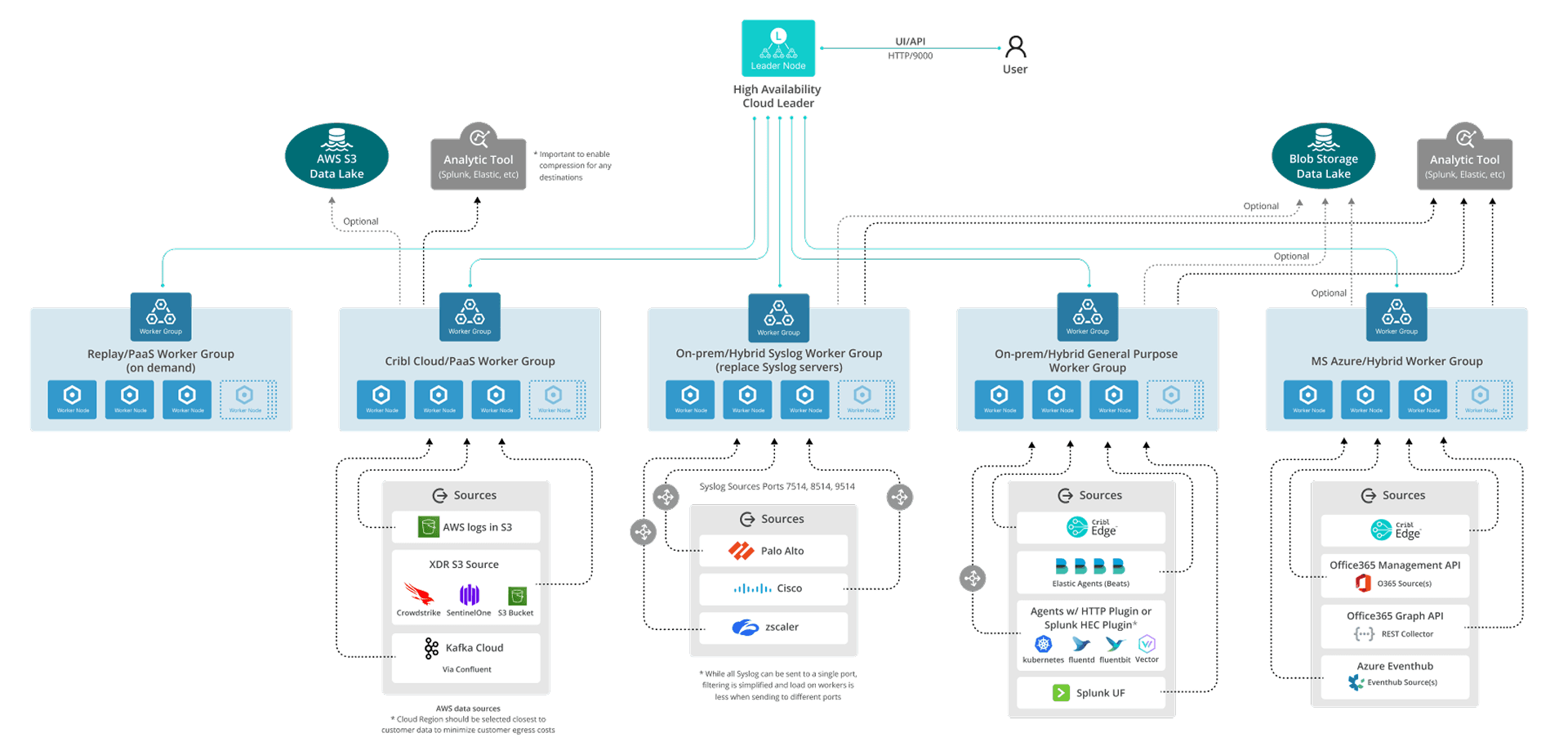
Hybrid deployment combines centralized cloud management with local data processing. The Leader, or control plane, resides in Cribl.Cloud, while Workers and Edge Nodes can run in Cribl.Cloud, in customer-managed private or public cloud environments, or in the customer’s data centers.
Hybrid deployment is a strong fit for organizations that need to keep processing close to data for latency, security, or sovereignty reasons while reducing administrative overhead through centralized management. It also supports gradual cloud adoption without requiring a full migration up front.
On-premises or self-hosted deployment
In an on-premises deployment, Cribl software runs on infrastructure the customer manages. This model gives organizations direct control over the deployment environment and is well suited to strict data-residency, sovereignty, network-isolation, or air-gapped requirements.
Teams can start with a single-instance deployment when data volumes and processing needs are light. Distributed deployment supports higher data volumes, more complex processing, and enterprise-scale operations through multiple instances managed by a Leader Node.
Choosing the right model
Use Cribl.Cloud when speed, managed operations, and elastic scale are the priority. Choose hybrid when you want centralized cloud management with local processing or a gradual path to the cloud. Choose on-premises when infrastructure control, data sovereignty, network isolation, or air-gapped operation is the primary requirement.
Across all three models, Cribl lets organizations evolve their deployment over time without rebuilding their telemetry architecture from scratch.
Summary
IT and Security teams need more than another destination for growing telemetry. They need a foundation that can support human investigations, AI-scale workloads, and the workflows they have not built yet.
Cribl is the AI Platform for Telemetry. It brings together collection, processing, routing, storage, search, and app-building capabilities in a shared, open architecture for IT and Security.
With Cribl, you can:
Explore and understand telemetry before committing to collection and expensive downstream ingestion.
Reduce, transform, enrich, and route data at the edge or in motion.
Retain telemetry in open formats and search it in place wherever it lives.
Give teams a shared foundation for solutions, tailored apps, and AI-driven workflows.
Combine telemetry with the context needed to produce faster, more explainable answers.
Keep your choices open as tools, architectures, and AI capabilities evolve.
You get the visibility and intelligence you need without giving up control of your data, your infrastructure, or what you build next.