
Al gives vast datasets an investigative edge
Yes, Al can dramatically accelerate investigative speed and scale but also overwhelm fragmented, cost-constrained telemetry architectures - requiring unified, accessible, high-performance data pipelines and data stores to fully realize Al-enabled operations.
Modern investigations require Al-ready architecture. As agentic Al and automation move from experimentation into daily operations, the pressure on investigative workflows, telemetry pipelines, and storage architectures is only increasing. Teams need designs that keep humans in control while allowing Al to safely accelerate how they find, connect, and act on evidence.
To enable Al-driven investigations, organizations must rethink their data management strategy. The foundation is a simplified, unified ingest and search architecture that makes all relevant telemetry accessible without license bottlenecks, while optimizing for performance, scalability, and cost control. Data should be collected once, enriched at ingestion, routed intelligently, and stored in a format that supports elastic, high-concurrency search for both human analysts and Al agents. By decoupling data ingestion, storage, and analytics, composable architecture provides flexible pipelines, expanded data access, and scalable search across massive telemetry volumes.
The result is an Al-ready environment where telemetry becomes a shared strategic asset that powers faster investigations, reduces operational friction, lowers tool costs, and enables security and Al teams to operate with greater speed, scale, and confidence in an increasingly complex digital landscape. This guide outlines how to build an Al-ready telemetry architecture for practical investigations across security, IT, and platform engineering teams. It focuses on creating a unified, flexible data foundation that supports both human analysts and Al agents at scale.

Al can't fix what telemetry breaks
Vendors often position Al as the cure for slow, manual investigations. In reality, many organizations discover that-even after investing in Al-their investigative speed and confidence remain limited. The issue is not the sophistication of the models, but the condition of the telemetry beneath them. When telemetry is fragmented across disconnected tools, inconsistently structured, or enriched only after ingestion, Al cannot meaningfully accelerate outcomes. It simply moves faster through the same bottlenecks.
As cloud and hybrid environments scale, telemetry volumes surge and overwhelm legacy architectures. To control costs, teams sample logs, delay enrichment, or isolate pipelines by platform. The result is greater noise, reduced context, and increased operational friction. Al systems excel at querying and correlating data at a scale humans never could, but they depend on structured, contextualized telemetry. Organizations seeing real gains are redesigning their data foundations: building flexible, enriched pipelines that support multiple tools simultaneously and expose normalized, high-value telemetry to both humans and Al. In the Al era, investigative success is no longer measured by how much data you collect. It's measured by how intelligently you activate it.
Investigative architectures today
Investigators are fighting their architecture: Security and IT investigators are pressured to move faster while environments become more complex.
Telemetry is expanding rapidly across cloud, applications, networks, and identities. Al is shifting from passive insight to autonomous action.
Security and IT investigators are under pressure to move faster while environments become more complex.Telemetry is expanding rapidly across cloud services, applications, networks, devices, and identities. At the same time, Al is shifting from passive insight to autonomous action.
Agentic systems don't just summarize dashboards. They generate hypotheses, execute parallel queries, and move across systems at machine speed. Most existing architectures — especially traditional observability tools and SIEMs — were never designed for that level of scale or concurrency.
Several structural issues show up repeatedly:
Siloed telemetry: Security data lives in one platform, observability in another, business analytics elsewhere. Teams optimize telemetry for their own tools, creating inconsistent schemas, enrichment methods, and retention policies.
Fragmented workflows: Investigators must pivot between systems, manually stitch together context, and rebuild timelines from disconnected datasets. Collaboration slows, and root cause analysis becomes inefficient and uncertain.
Brittle foundations for Al: Al inherits these weaknesses. Even advanced models struggle when data is incomplete or inconsistent. Without structured, normalized telemetry, Al requires more queries, more compute, and more cost to produce reliable answers.
Query explosion and cost strain: Humans investigate sequentially and prune quickly. Al evaluates multiple hypotheses in parallel across systems, sharply increasing concurrency and infrastructure strain. Architectures built for human-scale workloads hit performance limits, and licensing costs escalate.
The answer isn't "just add another tool." It's to evolve toward an investigation-optimized architecture: comprehensive telemetry collection, pipeline-based normalization, flexible routing, and scalable search across real-time and historical data.

Connect your resources
Network connectivity architecture defines how devices, systems, and applications connect and communicate across an organization. By establishing traffic flow paths, segmentation boundaries, and security enforcement points across core, distribution, access, edge, and cloud layers, it creates a structured and resilient digital ecosystem.
This network design is not only about performance and uptime — it is also about visibility. Defined traffic paths and logical segmentation produce consistent, high-value telemetry at known control points, making analysis faster and more accurate.
When network architecture is thoughtfully designed as an investigative foundation:
Telemetry can be captured at predictable choke points, reducing blind spots.
Segmentation boundaries become natural investigation pivots and filters.
Access patterns and east-west traffic become more interpretable over time.
Cribl Search-in-Place capabilities use this connectivity architecture by letting teams query telemetry wherever it resides — such as object storage, data lakes, or analytics platforms — without rehydration or re-indexing. By using the organization's structured connectivity architecture as an access map, Search-in-Place delivers federated, high-speed access to distributed data, reducing cost and enabling scalable, Al-ready investigations across hybrid environments.
Investigative architectures tomorrow
Strategic advantage of Al-driven investigations: Transform investigations by accelerating detection, improving accuracy, and scaling intelligence.
Artificial intelligence, particularly agentic Al, marks a fundamental shift in how investigations are conducted across security, IT, and platform engineering. Like the PC and cloud before it, Al goes beyond efficiency gains; it reshapes workflows, operational scale, and decision-making.
Traditional investigations are human-driven. Analysts move between dashboards, manually query logs, and piece together telemetry with human-generated context such as tickets, chat threads, and change records. As telemetry volumes and system complexity increase, this model becomes slow and difficult to sustain.
Al-driven investigations transform this approach:
Agentic systems continuously interrogate telemetry, testing multiple hypotheses simultaneously.
These systems correlate signals across domains and enrich findings in near real time.
Rather than executing a handful of manual queries, Al can run dozens or hundreds instantly, surfacing anomalies, mapping causality, and prioritizing meaningful risk.
However, realizing these benefits requires architectural readiness:
Telemetry must be collected once, normalized at ingestion, and enriched with identity and business context.
Data needs to be accessible at scale without performance or cost constraints.
Machine telemetry and human-generated data (tickets, code reviews, knowledge base articles, chat histories) must be fused into a unified, queryable layer so Al can reason effectively.
In an Al-ready investigative architecture:
Data ingestion, storage, and analytics are decoupled, allowing each to scale independently.
Telemetry becomes a shared strategic asset, not a cost silo tied to any single tool.
Governed access and role-aware controls ensure that Al and humans operate on the same trusted data without

Al does not replace investigators; it elevates them. Organizations that modernize their telemetry architecture to support agentic workloads gain a decisive operational advantage, moving from reactive analysis to proactive, scalable intelligence.
Al will fundamentally reshape investigations
Unlocking Al's full potential requires modern, scalable data architectures that provide broad access, fast search, cost efficiency, and human oversight.
THE POSITIVES:
How Al accelerates investigations
Artificial intelligence can dramatically accelerate and enhance security and IT investigations when built on the right telemetry foundation.
Speed and scale: Al agents can run 10-100x more queries than humans, rapidly analyzing logs, metrics, and traces to detect anomalies and correlate signals across systems.
Automation of busywork: With a scalable telemetry architecture, Al can automate data retrieval, surface context, and guide analysts to likely root causes, reducing mean time to detect (MTTD) and mean time to resolve (MTTR).
Amplifying humans, not replacing them: Rather than displacing investigators, Al amplifies them by enabling smaller teams to move faster with greater analytical depth while preserving human judgment and oversight.
THE CHALLENGES:
Where Al can add risk
Artificial intelligence can also introduce new risks in security and IT investigations when the data foundation is weak or governance is missing.
Infrastructure and cost overload: Al agents generating 10-100x more queries may overwhelm legacy systems, increase costs, and expose architectural weaknesses.
Bad data, bad outcomes: Poor data quality or incomplete telemetry can lead to false positives, missed threats, and misplaced confidence in Al-driven conclusions.
Over-reliance on automation: Excessive dependence on automation may erode analyst expertise and raise governance concerns, especially when Al decisions aren't explainable or auditable.
Without strong data foundations and oversight, Al can amplify complexity and operational risk instead of improving outcomes.

The bottom line
Al will transform investigations, but its effectiveness depends on the underlying data architecture. Organizations that modernize their telemetry pipelines to ensure broad data accessibility, elastic scalability, cost efficiency, and high-performance search will enable faster, more accurate, and more collaborative investigations.
Those that do not may find that Al accelerates cost, infrastructure strain, and confusion rather than clarity. Ultimately, the determining factor will not be the sophistication of the Al itself, but whether the organization's data foundation is built to support it.
Telemetry pipelines
The control point for Al-ready investigations?
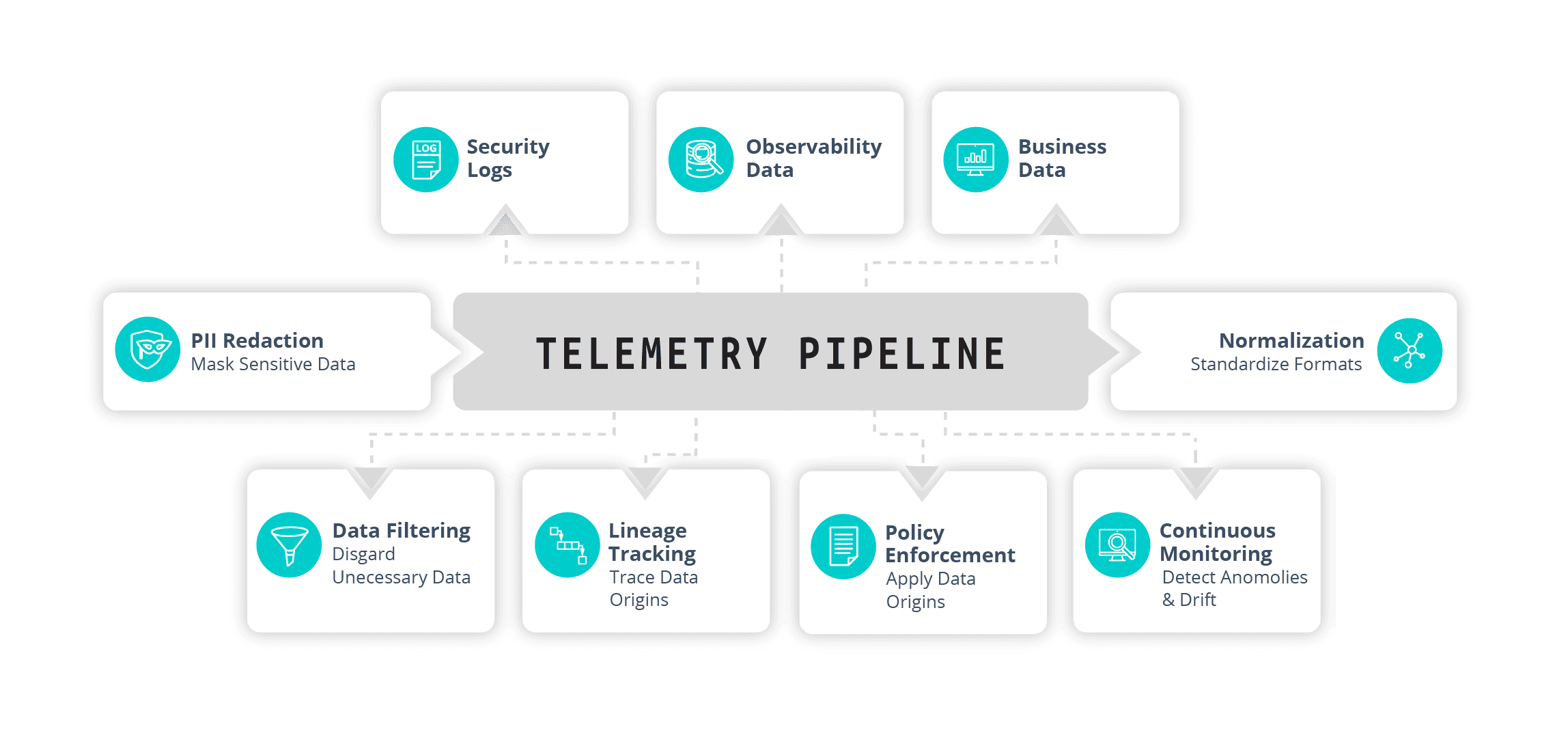
Telemetry pipelines have emerged as a foundational architectural layer in contemporary data ecosystems. They serve as the primary front end for ingestion, shaping, and delivery of observability and security telemetry (logs, metrics, traces) to downstream analysis platforms.
In modern distributed environments, this layer quietly controls the essentials:
Investigative speed
Data quality and relevance
Ingestion and storage costs
Overall downstream performance
Through normalization, enrichment, filtering, routing, and lifecycle management, pipelines decide what data matters, how it's structured, and where it flows.
Many organizations have adopted independent, vendor-agnostic pipelines for their core strengths:
Transparent and modifiable routing
True multi-destination support
Freedom to change tools without re-instrumentation or lock-in
As vendors embed pipelines deeper into their own ecosystems, priorities often shift toward proprietary integrations. Routing options narrow, portability declines, and the vendor lock-in that pipelines were designed to eliminate begins to return.
With telemetry volumes surging, multi-tool stacks becoming standard, and budgets under pressure, the pipeline is no longer just infrastructure — it has become a strategic control point. Teams that keep this layer open and interoperable retain real advantages:
Precise cost control at ingestion (drop, sample, or shape before expensive tools)
Optimal routing of high-value signals to the right destinations
Rapid adaptation to new tools and investigative patterns
Full governance over sensitive data flows and retention
Telemetry pipelines are now the center of gravity for observability, security operations, and data driven agility. How organizations manage this layer will increasingly determine how quickly they investigate, how affordably they operate, and how readily they evolve.
Engineering a composable analysis platform
The days of "data-to-SIEM-to-insights" as the only path are over.
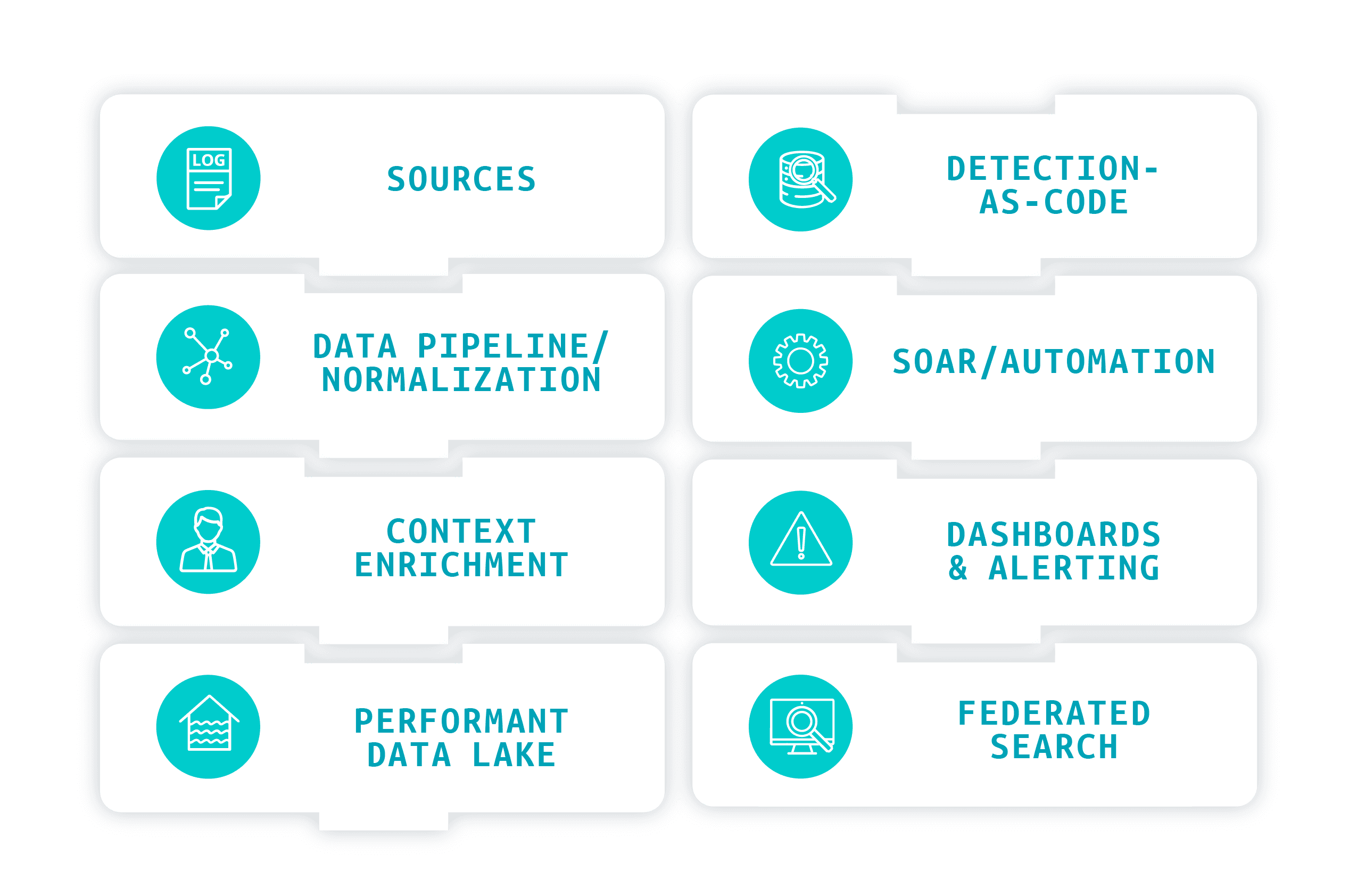
Modern detection and response require defenders to rethink traditional models. Engineering a composable analysis architecture is not about abandoning centralized analysis platforms. It's about evolving them into interoperable, automated, and adaptable frameworks that can keep pace with cloud scale, Al proliferation, and increasingly sophisticated threats.
A composable analysis stack typically:
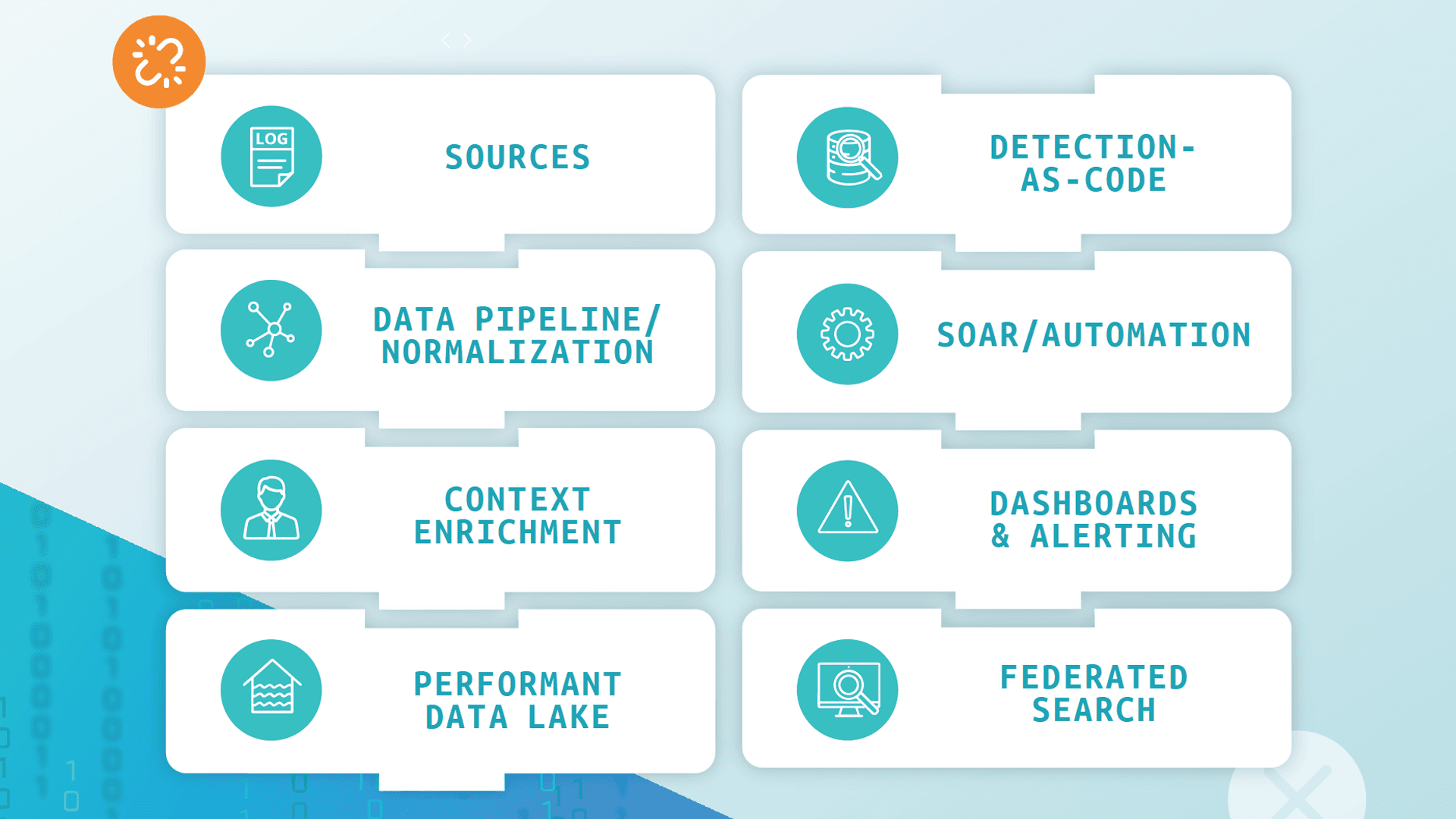
Deconstructs detection and response into functional layers: data collection, normalization, enrichment, storage, detection engineering, automation, and investigation.
Optimizes each layer with the right tool and appropriate level of automation, instead of forcing one platform to be the single "brain".
Balances the trade-off between platform simplicity and best-of-breed flexibility through APls, data pipelines, and orchestration layers.
With a clear security strategy and governance model guiding design, organizations can achieve:
Scalable observability and security analytics
Detection-as-code practices that keep pace with change
Al-driven automation where confidence is high
Federated search across hot, warm, and cold data
The result is a future-ready analysis ecosystem built for autonomy, resilience, and continuous evolution — ready for human and Al-driven investigations.
How does Cribl, the Al Platform for Telemetry, support Al-ready investigations?
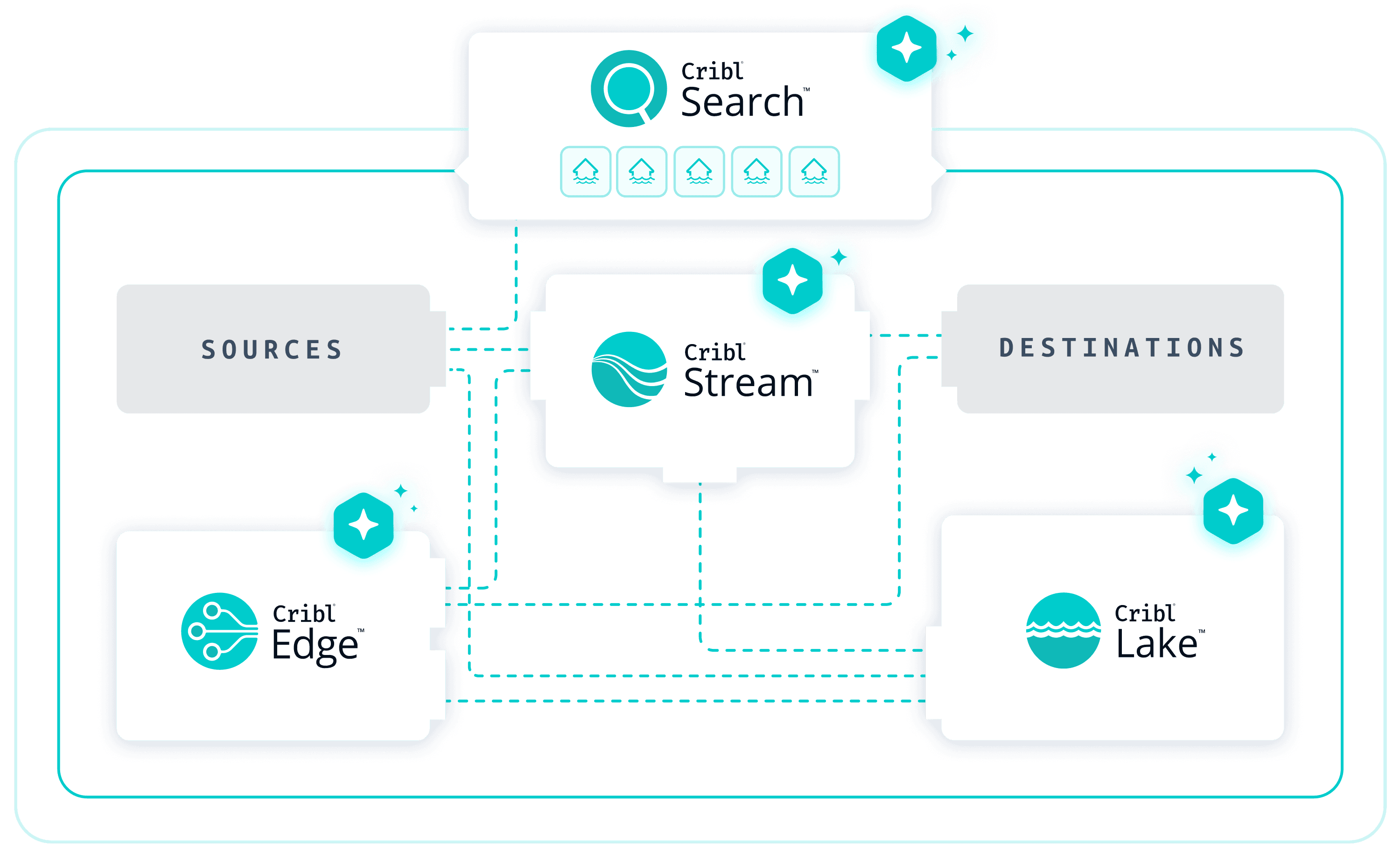
A modern investigation-ready architecture aligns directly with Cribl, the Al Platform for Telemetry, where each foundational layer - collection, pipeline, storage, and analysis - is powered by a purpose-built component of the Cribl platform. Rather than stitching together disconnected tools, Cribl delivers an integrated yet modular approach that gives teams choice, control, and flexibility without lock-in.
Intelligent collection at the source
Cribl Edge is a vendor-neutral, intelligent agent that collects and processes telemetry at the source across endpoints, servers, and cloud workloads. By filtering, transforming, and routing data before it leaves the environment, Edge reduces noise and downstream costs.
Key characteristics:
Local filtering and transformation to cut noise early
Routing to multiple destinations from a single agent footprint
Built-in buffering to ensure resilient delivery during outages
Lightweight design for rapid deployment across distributed systems
Telemetry-optimized lakehouse storage
Cribl Lake combines scalable object storage with high-performance analytics in a lakehouse model designed specifically for telemetry. It supports single ingestion with tiered retention and direct, in-place search.
With Lake, teams can:
Maintain long-term, searchable retention without SIEM-scale license costs
Apply automated lifecycle policies to optimize cost, compliance, and performance
Turn "cold" object storage into an always-on investigation asset
The industry-leadingtelemetry pipeline
Cribl Stream is the industry-leading telemetry pipeline for security and observability. It centralizes telemetry processing, normalizing formats, enriching events, and routing data to the right destinations.
By decoupling sources from analytics platforms, Stream gives you:
Fine-grained ingestion and routing control
Vendor-neutral flexibility to add, change, or decommission tools
Replay capabilities so historical data can be reprocessed without recollection
This keeps investigations agile and efficient as requirements, tools, and Al capabilities evolve.
High-speed analytics and federated investigations
Cribl Search delivers high-speed analytics through a unified ingest-to-query architecture with built-in Notebooks for collaborative, interactive investigations.
It reduces friction by combining:
Rapid onboarding of new datasets
Automatic schematization and Al-powered parsing
Distributed search that scales elastically with demand
Search-in-Place enables teams to query data directly where it resides—in object storage, data lakes, or analytic platforms—so both human investigators and Al agents can work from the same telemetry fabric without rehydration or duplicate storage.
Embedded Notebooks give you a collaborative workspace where queries, results, context, and Al guidance coexist. Investigators can use natural language to explore data, pivot across datasets, document findings, and create repeatable workflows.
Agentic Al and Copilot experiences assist with:
Query generation and refinement
Summarization of investigative steps and findings
Next-step recommendations and hypothesis generation
These capabilities keep humans in control while dramatically reducing manual effort.
Create the telemetry foundation Al needs
Together, Cribl Edge, Stream, Lake, and Search form an Al-ready telemetry fabric that unifies ingestion, storage, search, and collaboration.
All of this is delivered with no lock-in, no data loss, and no compromises on governance or control.
Conclusion: Accelerate investigations with Cribl
Across security, IT, and platform engineering, investigations have become more complex. Telemetry volumes are rising rapidly as cloud and hybrid environments expand, while Al adoption accelerates. Agentic SRE and SecOps systems may generate 10-100x more queries than human analysts, overwhelming legacy SIEM and observability platforms not designed for Al-scale workloads.
Costs rise, performance limits surface, and teams are expected to operate as ""1Ox investigators"" without the infrastructure to support them.
A central challenge is fragmented access to Al-ready, investigation-grade data. Telemetry is often restricted by licensing, siloed tools, role-based controls, or ingestion gaps due to cost constraints, resulting in incomplete visibility. Analysts pivot between systems, chase logs, and work without full context, extending downtime and operational strain.
The answer is architectural:
A modern network architecture that structures how systems connect and communicate, creating an observable, resilient ecosystem.
Resilient telemetry collection and normalization across sources and environments.
Intelligent enrichment, scalable storage, and collaborative, federated search that bring human context and Al-ready telemetry together as a strategic asset.
Investigating with Cribl
Cribl, the Al Platform for Telemetry, enables organizations to modernize their telemetry architecture for Al-assisted, agentic investigations:
With Cribl Stream, teams can collect data once, enrich and filter it intelligently, and route it flexibly to reduce unnecessary ingestion costs and remove downstream bottlenecks while preserving future options.
Cribl Search delivers high-speed, elastic search across massive telemetry volumes, ensuring both humans and Al agents can access the data they need without license constraints or data-movement tax.
Cribl Edge and Cribl Lake extend this fabric from source to lakehouse, giving teams end-to-end control over how telemetry is collected, shaped, stored, and activated.
By unifying pipelines and expanding governed access to telemetry, Cribl transforms data from a fragmented cost center into a scalable foundation for faster, more conclusive investigations. By scaling and optimizing telemetry across tools and teams, organizations gain governed access and high-speed analysis for both humans and Al, driving faster, more decisive investigations at enterprise scale.