Live Webinar: Turn Telemetry into Defense with Cribl Detect

Cribl Detect
A new way to SIEM. Turn telemetry into defense, investigate and hunt across your full estate with AI, and retain full-fidelity data economically.

In a nutshell
Full coverage without the full ingest bill.
Legacy SIEMs force you to centralize data in proprietary storage before detection and investigation. As volumes outpace budgets, you either overspend or go blind.
With Cribl Detect, posture management finds and fixes coverage gaps. Streaming detections fire in real time; correlations catch slow-burn threats. Federated search hunts wherever data lives. With the broader Cribl platform, tiered routing sends high-value data to fast analytics, the rest to cheap storage.
Benefits
Eliminate blind spots, speed up investigations.

Get signal before storage
In-stream detections enable analysis directly in the pipeline, before data is ingested, indexed and stored.

Cut wasteful SIEM costs
Stop paying premiums for every log. Unlock signal-rich data for detection and response, keep the rest in low-cost storage.

Close coverage gaps
Posture management shows where key threats lack detections, what telemetry is missing, and which rules are broken.

Accelerate investigations
Federated search reasons across your full estate–without forced centralization. AI copilot gets you answers for faster containment.

Modernize at your pace
Run Cribl Detect alongside your existing stack. Onboard what you need, when you need it.

Open at every layer
Bring–or keep–your own storage. OCSF and KQL for portable data and queries, ITSM and SOAR integrations for response workflows.
Features
Why Cribl Detect?
Security value starts in-stream.
Signals before storage: streaming detections create real-time signals for fast response.
Correlations: chain detections to surface slow-burn attack chains isolated signals would miss.
Rule templates: 8,000+ pre-built detections for a wide range of use cases to quickly expand coverage.
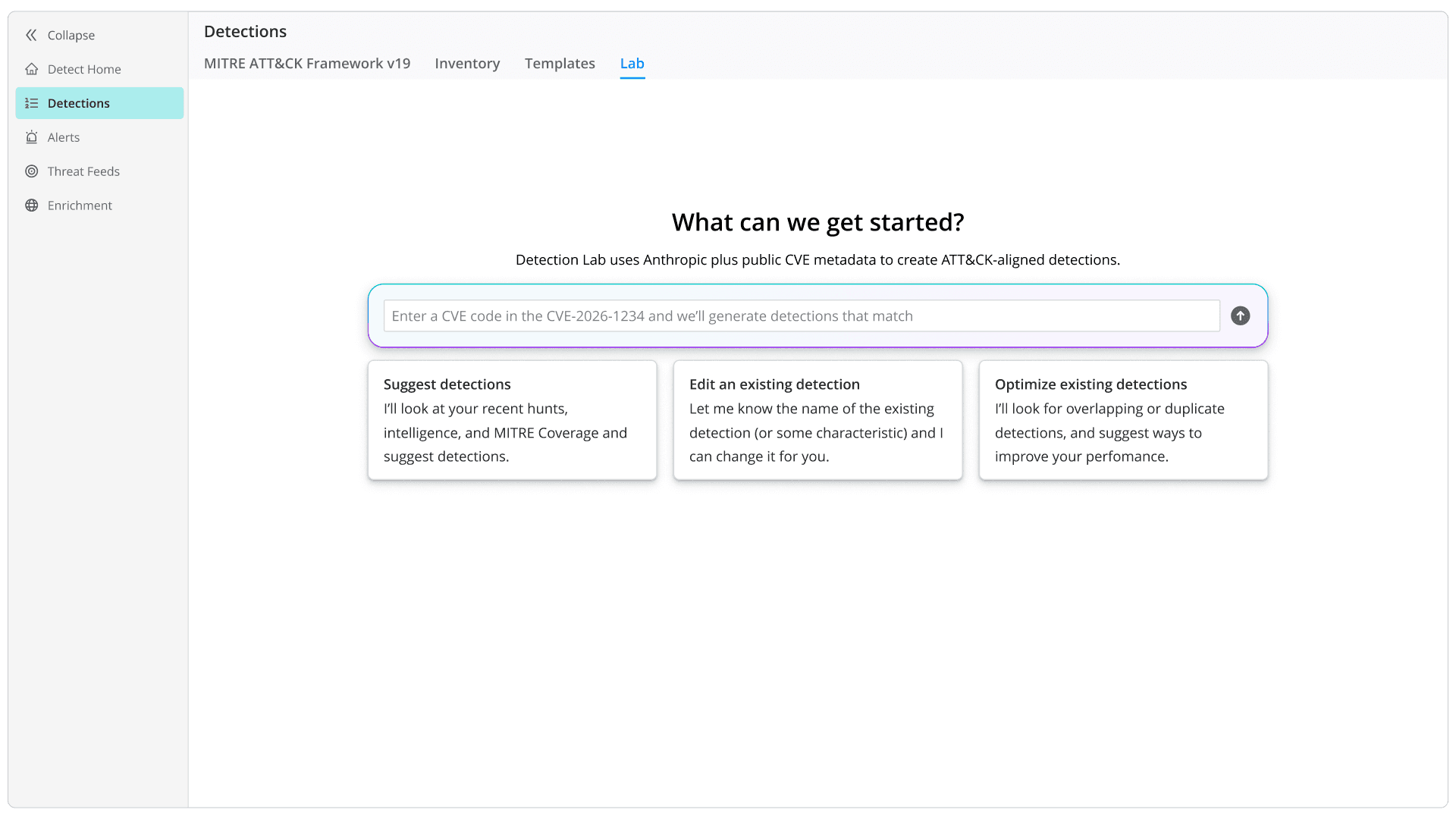
Detection Lab: intuitive AI copilot UX to build, validate, and tune rules.
Scale: queries run reliably across high volumes, so signals won’t drop.
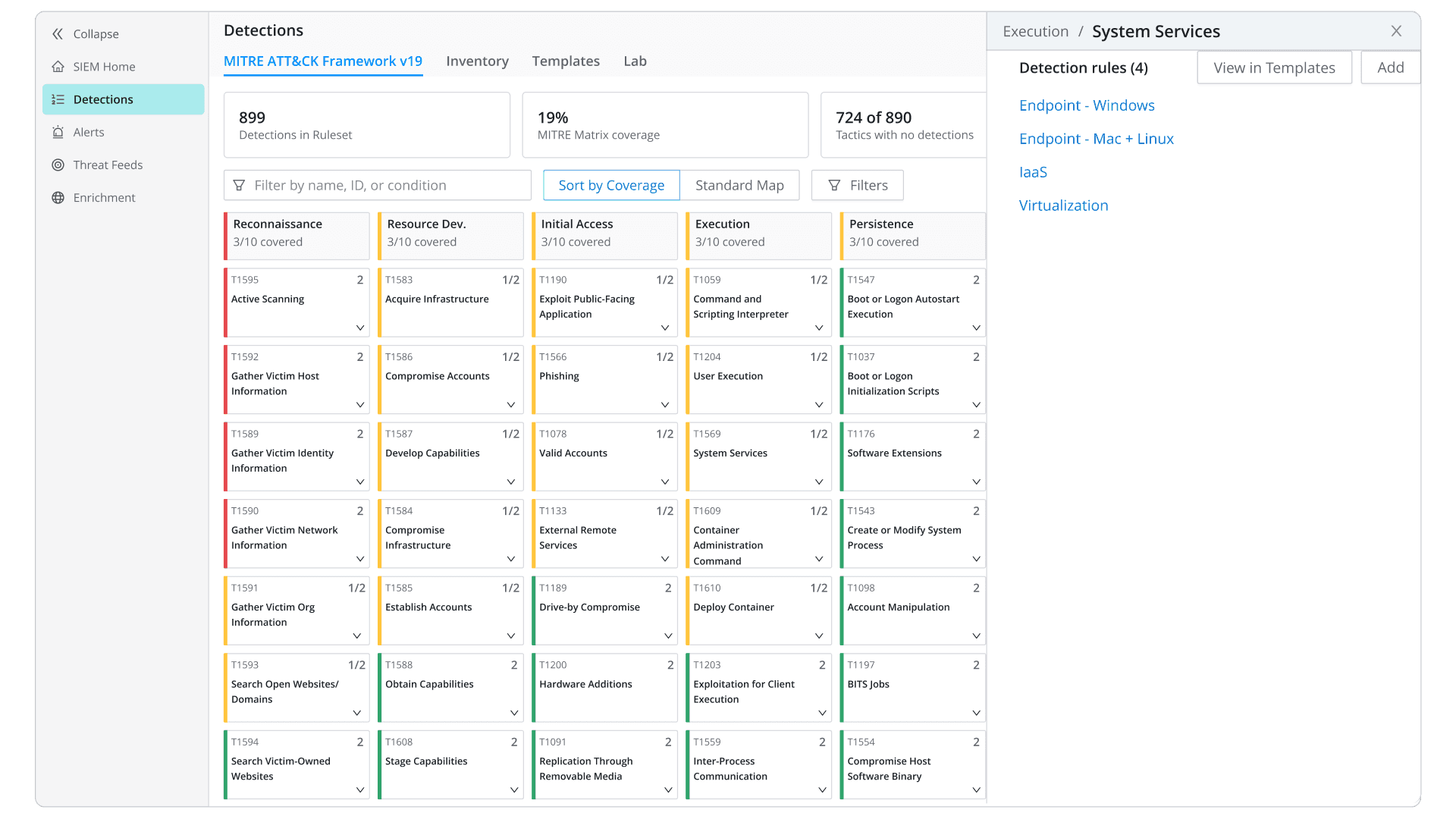
Treat detection as a strategic program, not an ad hoc tactic.
MITRE mapping: see which ATT&CK techniques have coverage, and where you’re missing telemetry or detections.
Coverage expansion: get insights on where to fill gaps with new detections, scoped to your priority APTs.
Fixes for broken, noisy rules: uncover issues with configurations, schemas, or detection logic.
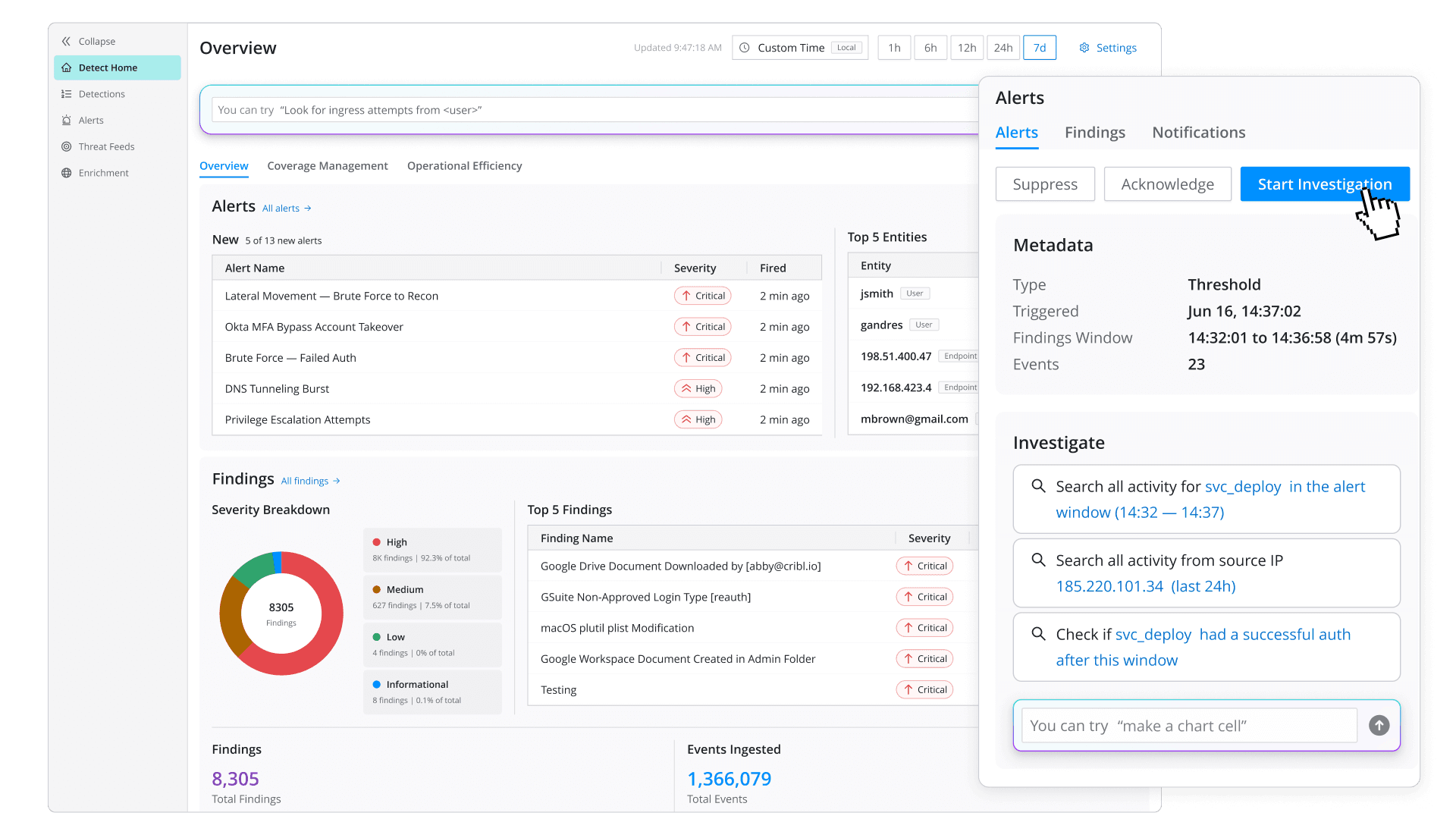
AI-Powered investigation, easy response integration.
One search across any store: federation queries data across Cribl, other storage, or other SIEMs.
Natural language investigation: drive investigations using AI copilot, without needing in-depth query expertise.
Automated triage: AI alert analysis cuts through the noise and surfaces only genuine threats.
Your workflows: integrations with existing tools: notifications, ITSM and SOAR.
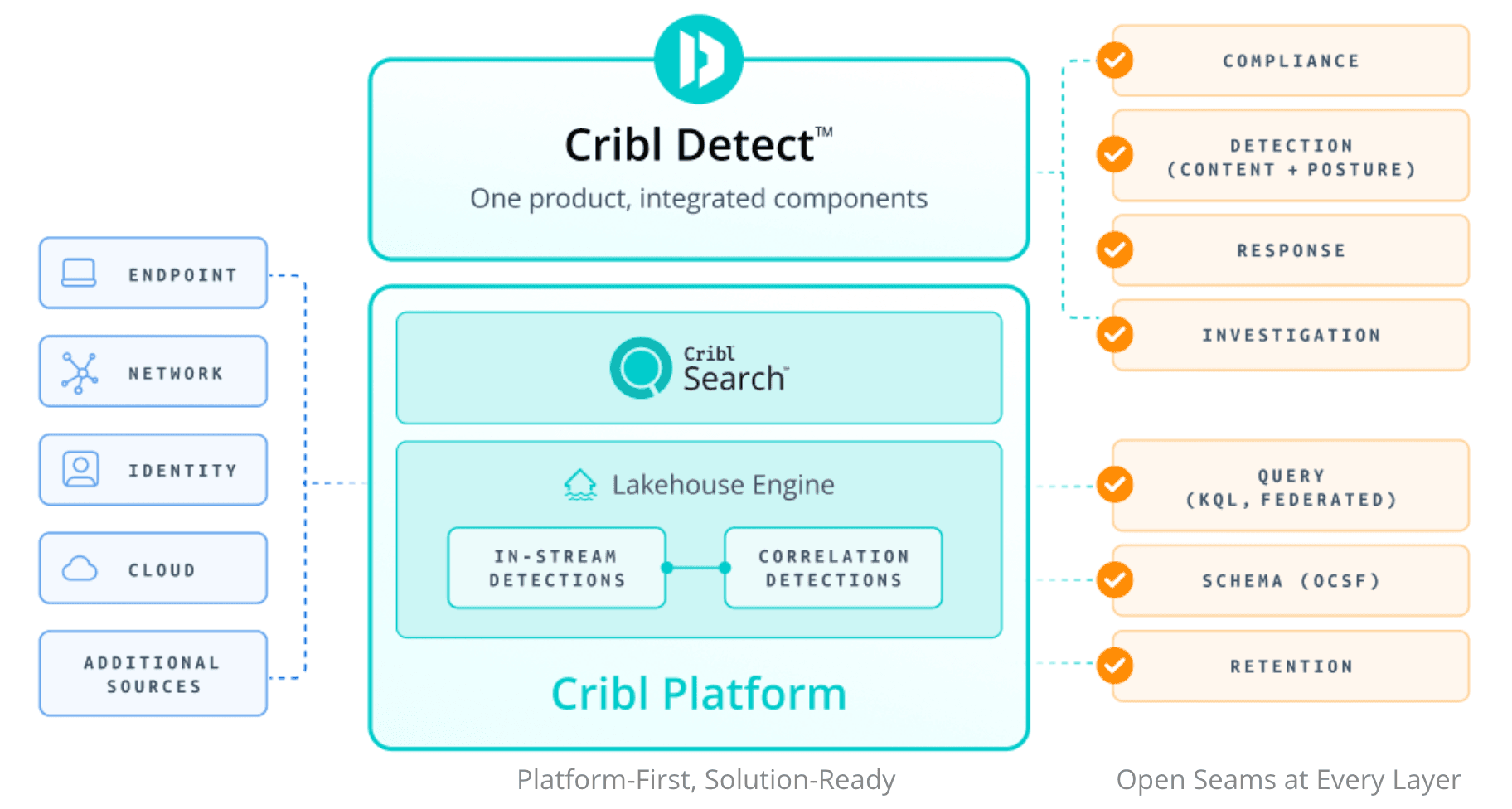
Start where your data already lives.
Composable: pipeline, schema, response, and investigation are all Cribl-native. None are mandatory.
Open standards: OCSF on write, KQL for queries. No proprietary schema.
Multi-store: Cribl Lake, other data lakes or object stores. Compatible with other SIEMs.
Easy, secure migration: Sigma support and assisted query translation shorten timelines.
Capabilities
Feature highlights
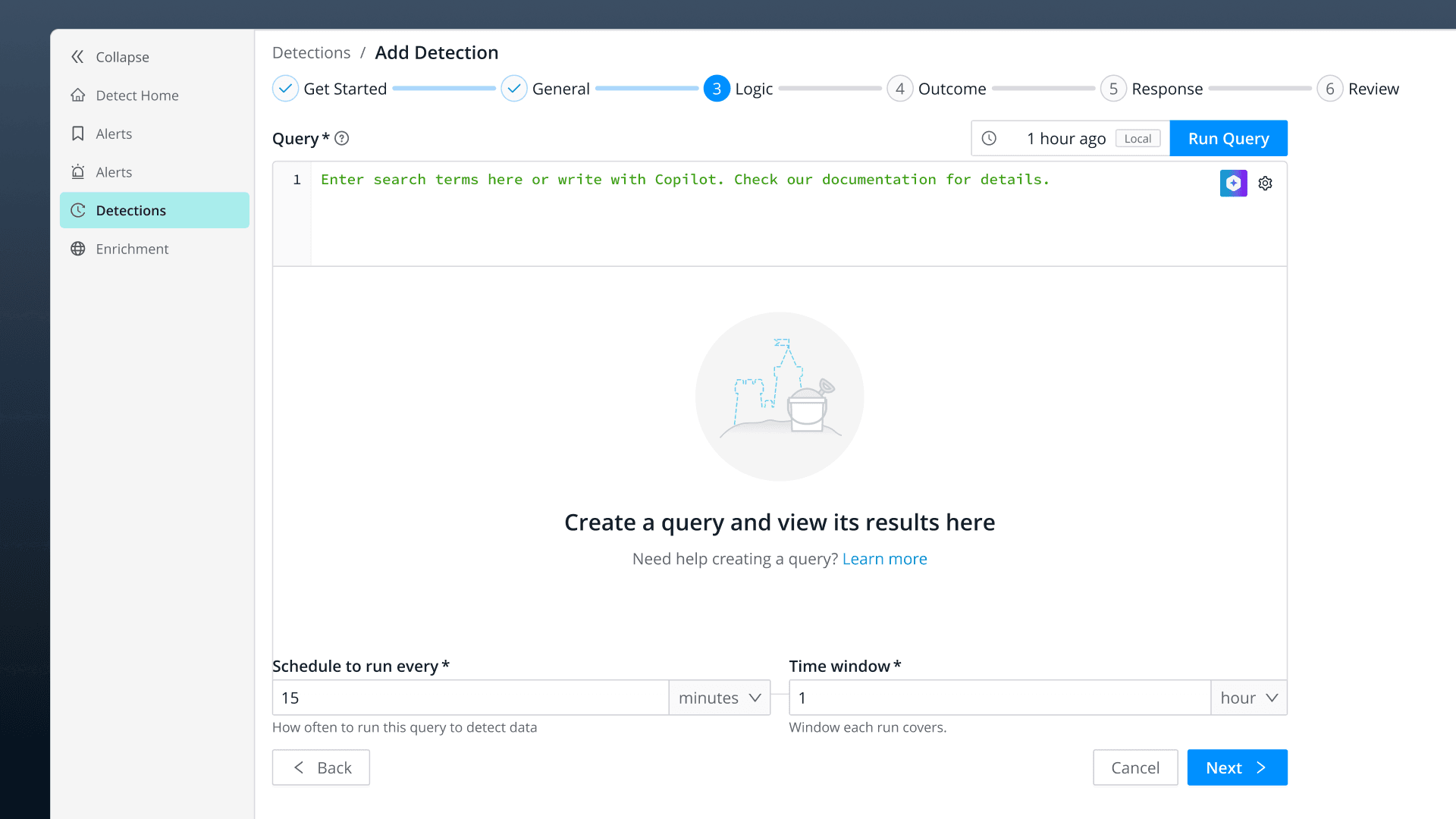
In-Stream, pre-storage detections
Security analytics are embedded directly in the pipeline to generate real-time signals for immediate alerts and fast response.
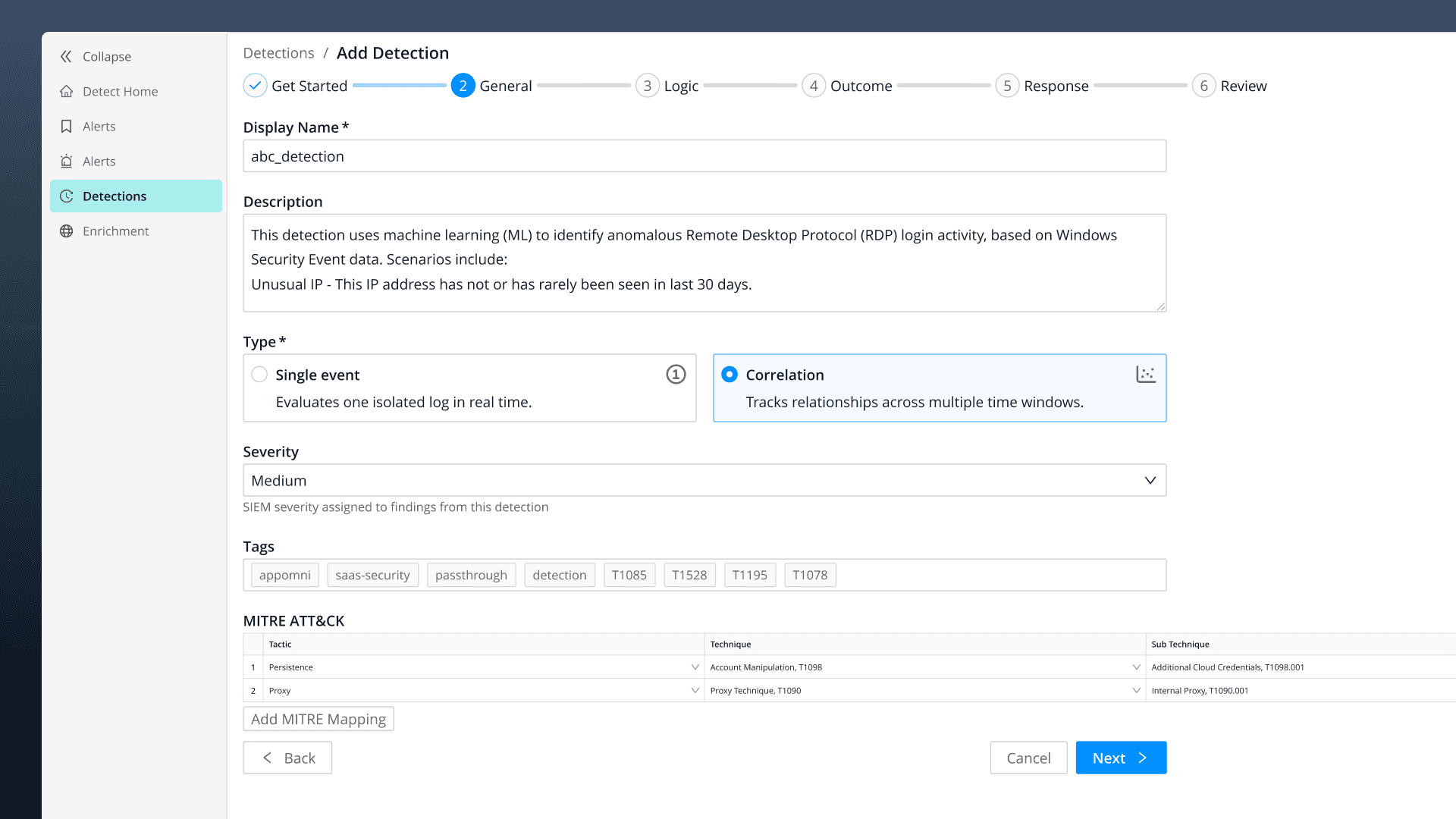
Correlation searches
Chain single event-based signals with related findings to piece together slow-burn attacks and advanced persistent threats that isolated detections miss.
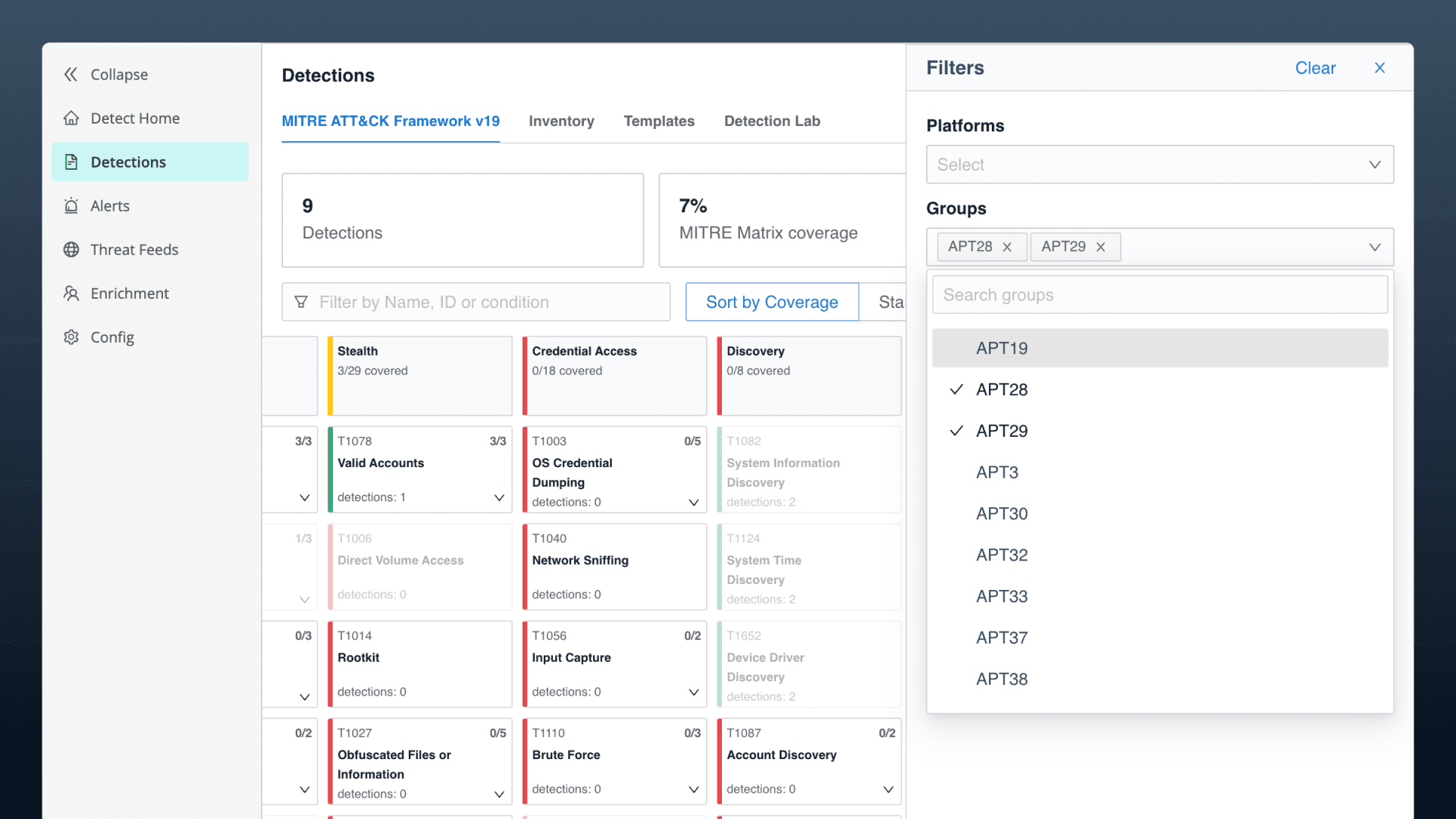
Coverage and posture management
ATT&CK maps, rule health, telemetry drift, and prioritized recommendations show where coverage is weak and what telemetry is missing.
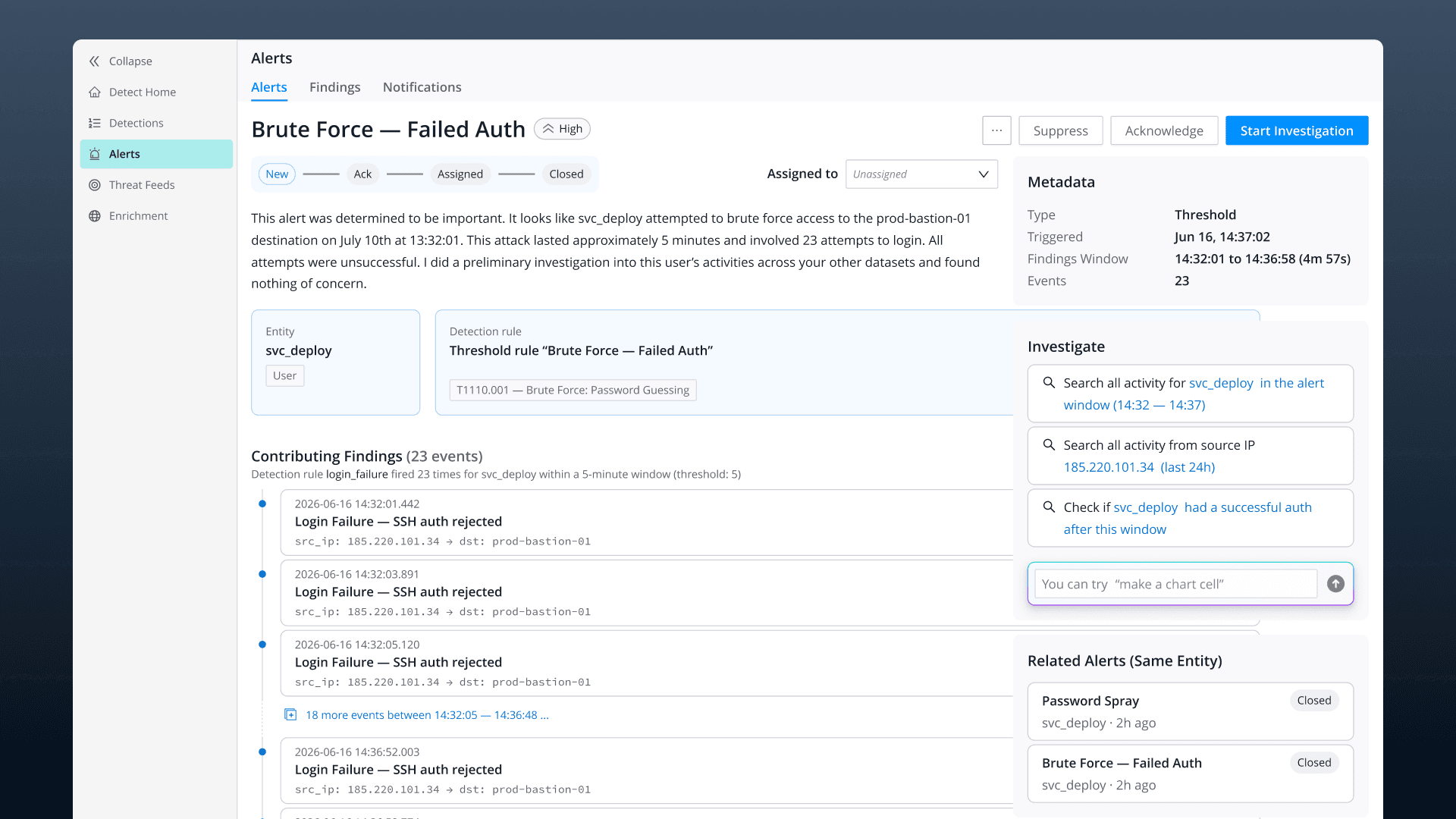
Alerting, triage, and response
Related signals group into one alert view, enriched with threat intel and internal context. Push it to the ticketing, notification, and SOAR tools you already use.
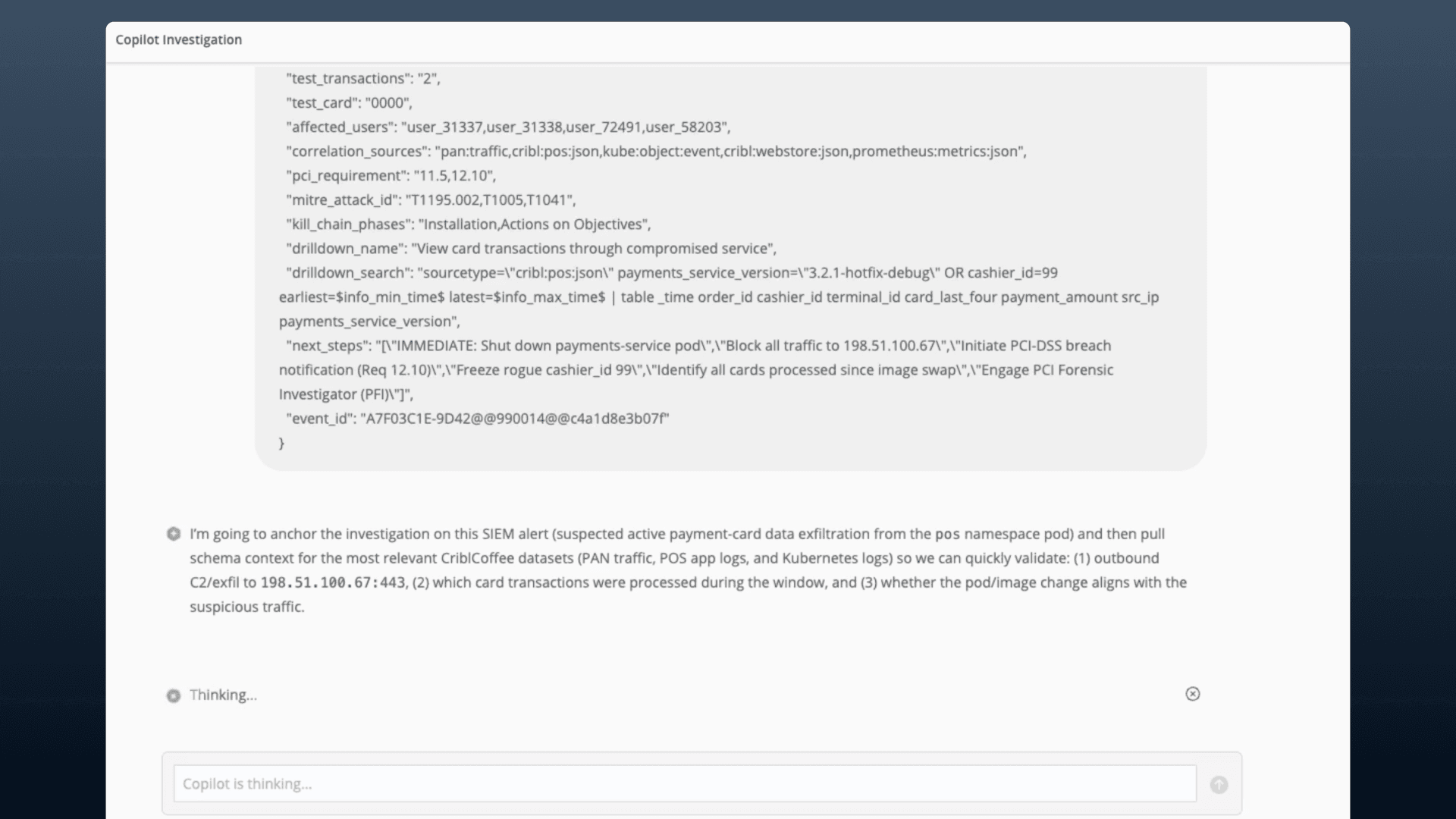
AI-powered federated search
Query telemetry wherever it lives—Cribl, other data lakes and object storage or other SIEMs—no rehydration. Collaborative Notebooks save the whole investigation flow in one place.
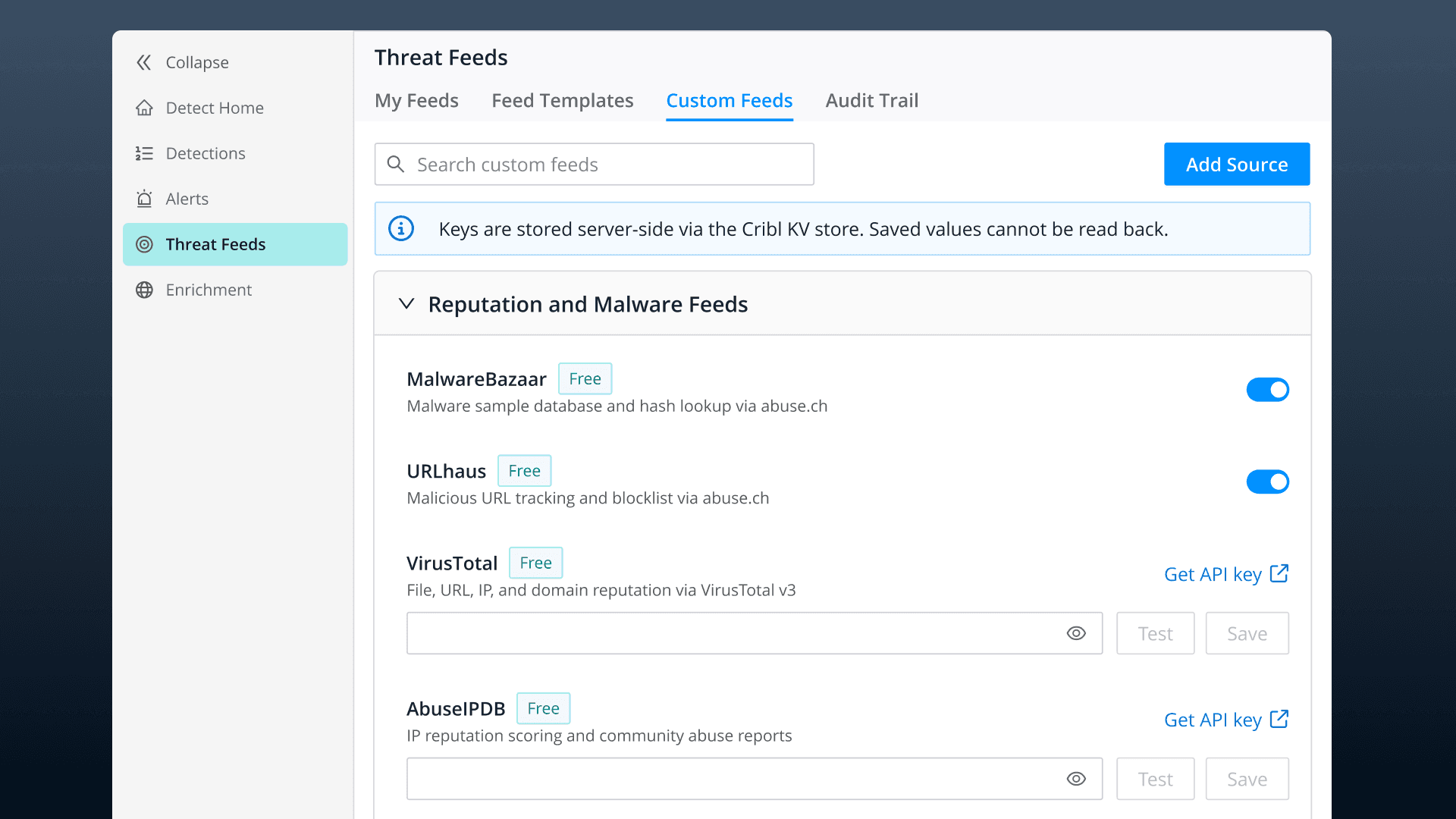
Threat intelligence and enrichment
Feeds enrich alerts with context for fast response. Threat Intel integrates emerging CVEs and APT behaviors, while internal context ties findings back to users, endpoints, and systems.
In-Stream, pre-storage detections
Security analytics are embedded directly in the pipeline to generate real-time signals for immediate alerts and fast response.
Correlation searches
Chain single event-based signals with related findings to piece together slow-burn attacks and advanced persistent threats that isolated detections miss.
Coverage and posture management
ATT&CK maps, rule health, telemetry drift, and prioritized recommendations show where coverage is weak and what telemetry is missing.
Alerting, triage, and response
Related signals group into one alert view, enriched with threat intel and internal context. Push it to the ticketing, notification, and SOAR tools you already use.
AI-powered federated search
Query telemetry wherever it lives—Cribl, other data lakes and object storage or other SIEMs—no rehydration. Collaborative Notebooks save the whole investigation flow in one place.
Threat intelligence and enrichment
Feeds enrich alerts with context for fast response. Threat Intel integrates emerging CVEs and APT behaviors, while internal context ties findings back to users, endpoints, and systems.
Differentiators
Key differentiators of Cribl Detect
Open
Run security analytics your way.
No vendor-specific schema, no data trapped behind one query language. Built on OCSF and KQL, Cribl Detect integrates with the infrastructure you have. No forced replacement, no vendor lock-in.
Early
Detection doesn't wait for storage.
Detection logic runs in the pipeline. Security signals are generated as soon as telemetry is in motion, even if the data is ultimately routed and stored elsewhere.
Continuous
Detection as a program, not a deployment.
Posture management shows where threats lack coverage, which rules have broken, and what to prioritize next, so detections remain resilient as your environment changes and adversaries adapt.

Economical
Security data shouldn't cost more than it's worth.
Retention economics are separated from analytics economics, so full-fidelity telemetry lives in open, low-cost storage and stays available long after the event.

Connected
Context, not tool-switching.
AI reasons across telemetry, detections, and context from your full security estate. Automated triage clears the noise so analysts work on what's real.
FAQ
Frequently Asked Questions
Resources
More knowledge, more power

SIEM Resources


Videos

Get Started
Ready to SIEM a new way?
See how posture management, streaming detection, open retention, and AI-powered investigation change what your SOC can cover — and what that costs.