
The challenge
State, local government, and education IT and Security leaders are currently stuck between a rock and a hard place. You have more data than ever flowing in from aging legacy systems and new cloud applications. At the same time, budgets are tighter than they have ever been. Teams end up paying a massive tax to analytics vendors just to keep the lights on, leaving very little room for innovation or proactive security measures. It is a cycle of paying more for the same level of visibility while staffing shortages make it harder to manage the complexity of your environment.
The solution
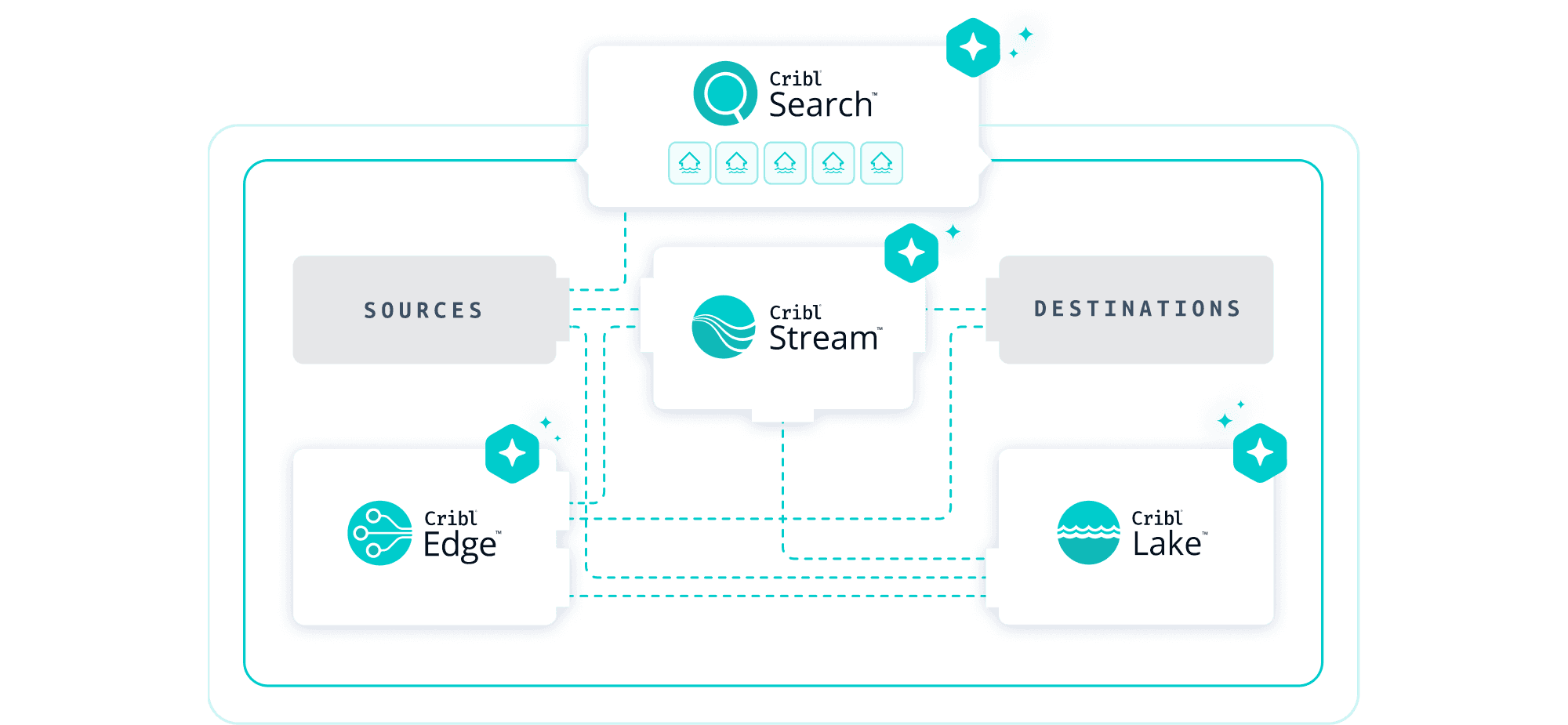
Cribl provides agencies, organizations, and educators with simplified collection, routing, transformation, and storage. By sitting between any source and any destination, you can collect, route, and transform data before they reach their final home. You can enrich logs with real-time context, redact sensitive information to meet privacy standards, and transform data into the exact format your tools require. The result is better data-driven decisions, more efficient data management, and the ability to deliver critical services securely and at scale. It creates a flexible architecture that lets you manage data growth and compliance requirements while maintaining clear visibility across your entire environment.
Handling U.S. federal government data? Cribl.Cloud Government, FedRAMP® Certified Class C, has you covered.
Use Cases
OPTIMIZE DATA COSTS ACROSS THE ORGANIZATION
Remove duplicate fields and unnecessary noise from high-volume sources before telemetry data is stored. This allows your team to stay within budget while redirecting those savings toward more critical modernization projects.
MEET COMPLIANCE AND RETENTION MANDATES
Swiftly address requirements for M-26-14 federal data logging and M-22-09 Zero Trust architecture while keeping the flexibility to comply with future orders. Route raw telemetry data to low-cost storage so it is always available for audits or investigations.
PROTECT SENSITIVE DATA
Automatically mask or redact personally identifiable information in telemetry data before it reaches your analytics tools. This keeps your organization compliant with privacy laws while maintaining the visibility needed to monitor for safety signals.
UNIFY LEGACY AND CLOUD ENVIRONMENTS
Bridge the gap between aging on-premises systems and cloud environments by consolidating telemetry data into a single view. This allows leaders to make informed decisions and modernize at their own pace without completely replacing existing infrastructure.

Customer Story
The City and County of San Francisco uses Cribl Stream to manage an overburdened syslog environment, cutting log volume by 70% to avoid SIEM license increases and give the team control over onboarding new tools under tight budget constraints.
Suite of Products
Cribl Stream
A vendor-agnostic telemetry pipeline for data collection, reduction, enrichment, and routing.Cribl Edge
An intelligent, scalable, edge-based data collection system for logs, metrics, and application data.Cribl Search
Performs federated search-in-place queries on any data, in any format, at any location.Cribl Lake
A simplified data lake solution to easily store, manage, and access data.
Take back control of your telemetry data
State, local government, and education organizations must move past the limitations of legacy management systems to meet modern security and operational demands. By implementing a vendor-agnostic approach to telemetry data, you can eliminate the technical debt with proprietary tools while maintaining full visibility into your environment. Cribl provides the flexibility to collect and transform telemetry data in flight, ensuring your teams have the information they need to make better decisions and protect the communities they serve. This efficiency allows you to redirect staff time and budget away from routine maintenance and toward the critical services that define your mission. You gain a scalable foundation that supports future growth and evolving compliance mandates without being forced into restrictive architectural choices.