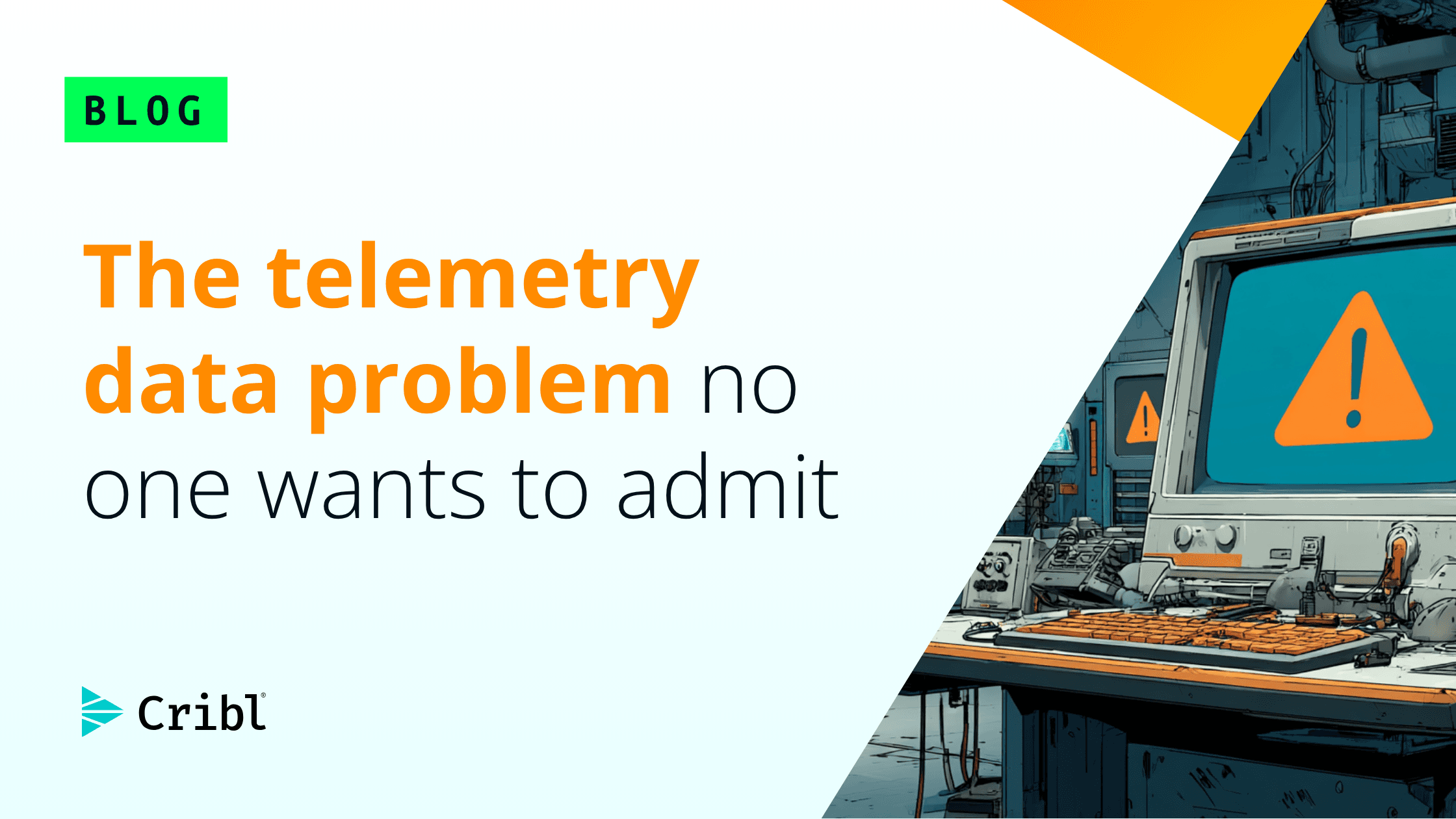

Security and IT teams are drowning. Not in threats, but in data. The logs, metrics, traces, events fueling today’s operations sprawl across cloud providers, on-prem infrastructure, SaaS tools, and a half-dozen point solutions, each one sitting in its own silo, accessible only through the vendor's lens. The tools we've built to manage that data are increasingly getting in the way.
Gartner's recent Market Overview for SIEM Platforms (March 2026) captures part of the problem. Based on thousands of client interactions, they note that cost control and operational complexity are now top drivers shaping SIEM buying decisions. They also recognize that no single solution architecture fits the full spectrum of organizational needs. That's a measured, analyst-correct way of saying the old model is breaking.
But the Gartner framing, while useful, only tells half the story. The real issue isn't just SIEM. It's the entire model of how we collect, store, and analyze telemetry data. In most organizations, both the telemetry and the workflows that act on it are trapped inside vendor-defined apps and data stores, instead of sitting on a shared telemetry foundation you control.
Too much data, too many owners
Organizations above 2,500 employees typically run a SIEM. Many also run separate observability platforms, cloud-native logging tools, endpoint detection solutions, and network monitoring stacks. Each of these ingests telemetry. Each stores some of it. And each provides analytics, but only for the data it controls.
The result is a fragmented telemetry estate where the answer to almost any operational question requires pulling data from multiple systems, reconciling different schemas, and hoping someone on your team has the tribal knowledge to navigate all of it. High-data-volume environments, those approaching 100TB per day of ingest, feel this most acutely. The cost of storing everything everywhere is unsustainable, and the cost of not storing it is operational blindness and compliance risk.
This isn't a vendor bug. It's a feature. The market evolved tool by tool, use case by use case, and nobody designed the whole system.
Predefined workflows are the enemy of good analysis
Here's the part the analysts tend to understate: existing solutions don't just limit your data access, they limit your thinking. SIEM platforms were built around a set of assumptions about how security operations teams work. Detection rules, correlation logic, and dashboards all reflect the vendor's model of your workflow, not yours.
Larger enterprises have pushed back on this for years, demanding extensibility and customization. Gartner acknowledges this: mature buyers with 20+ person security operations teams want platforms they can bend to their specific environment. But even "extensible" SIEM still means operating within a defined paradigm. You're customizing within constraints, not building for your actual workflow from the ground up.
Smaller teams face the opposite pressure. They get pushed toward MSSPs, or worse, “simplified” integrated security operations center (ISOC) solutions that abstract away the complexity but also abstract away the capability.
Neither group gets what they actually need: a platform that puts them in control of both the data and the analytics layer.
The right model: Data lake + per-persona analytics
What if you decoupled the two problems? Store your telemetry once, in a data lake you control — optimized for cost, retention, and query performance. Then build the analytics layer to fit the people doing the work.
That's the direction the market needs to move, and it's the direction Cribl is enabling right now.
With Cribl Lake, you get centralized telemetry storage without the per-GB extortion that comes with routing everything through a traditional SIEM. With Cribl Search, you query across that data regardless of where it lives. And now, with the app-building capabilities in Cribl, you can build purpose-built analytical experiences directly on top of your telemetry tailored to the specific workflows of your SOC analysts, your infrastructure team, your compliance function, or any other persona that needs access to operational data.
These capabilities let you vibe-code domain-specific UIs, guided workflows, and cross-product experiences that replace the "click across five screens and hope" model with something that actually matches how your team operates. AI-assisted app building means you don't need a dedicated frontend team to build something useful.
Stop fitting your operations to your tools
The Gartner note is right that the SIEM market will continue to segment between platforms, data lakes, and integrated SOC solutions as buyers try to find the right fit. But the deeper implication is that the market is fragmenting because no single product has solved the underlying problem.
The answer isn't a better SIEM. It's a better model: consolidate your telemetry, control your costs, and build analytics that serve your people. Not the other way around. That's what Cribl makes possible.
If you want to see where this is all heading, join us at CriblCon 26 — September 28–30 in Chicago at the Marriott Magnificent Mile. It's where security and IT teams get hands-on and practical about AI-ready telemetry: real-world sessions, live demos, and peer conversations about the exact cost, scale, and complexity challenges keeping you up at night. We’ll also be showcasing customer-built apps and workflows on shared telemetry, so you can see what this model looks like in practice. Register now at criblcon.cribl.io and come ready to rethink what your telemetry platform should actually look like.