
Some context about me
I'm a network engineer and data engineer. I've spent my career building pipelines, configuring routing tables, and making data flow between systems. I don't write React for a living. I've never deployed a container to production on purpose. Frontend development is not my thing.
But I had a problem worth solving, and the Cribl Platform let me solve it without turning into a software engineer first.
The problem
My team helps customers figure out what to do with their data sources. Which fields matter for security? Which ones drive observability? What detections should they run? What can they safely drop to save money?
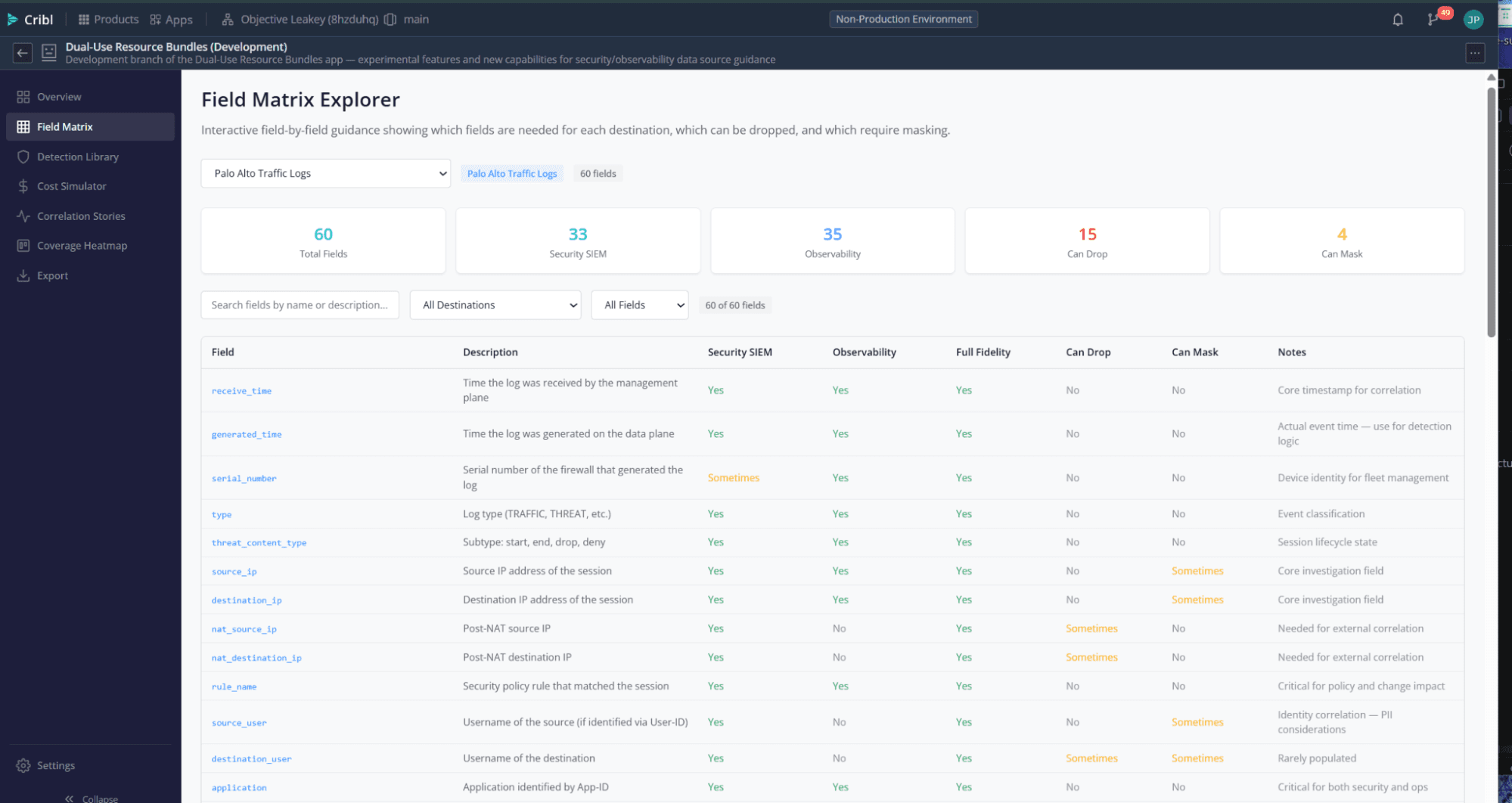
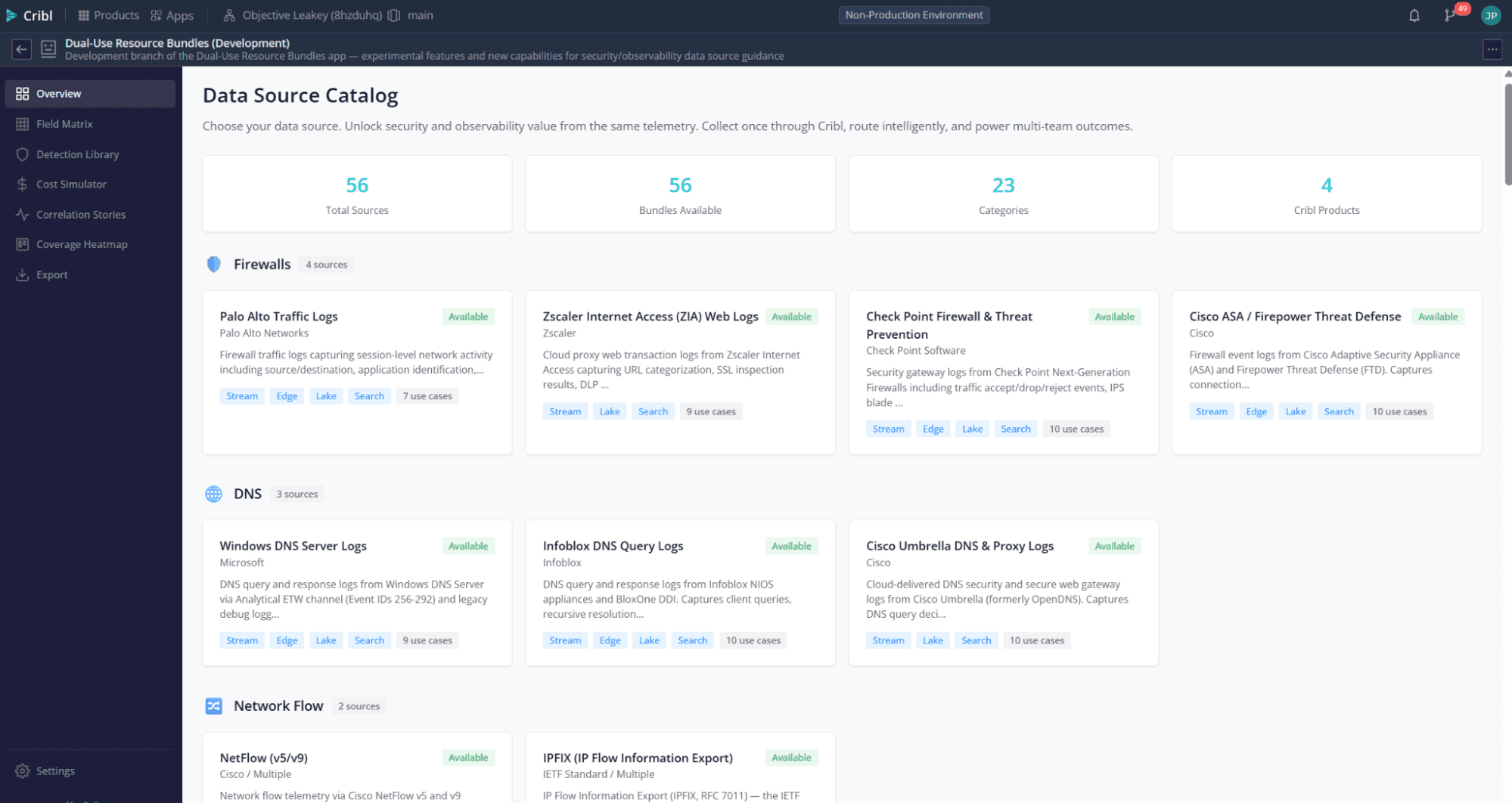
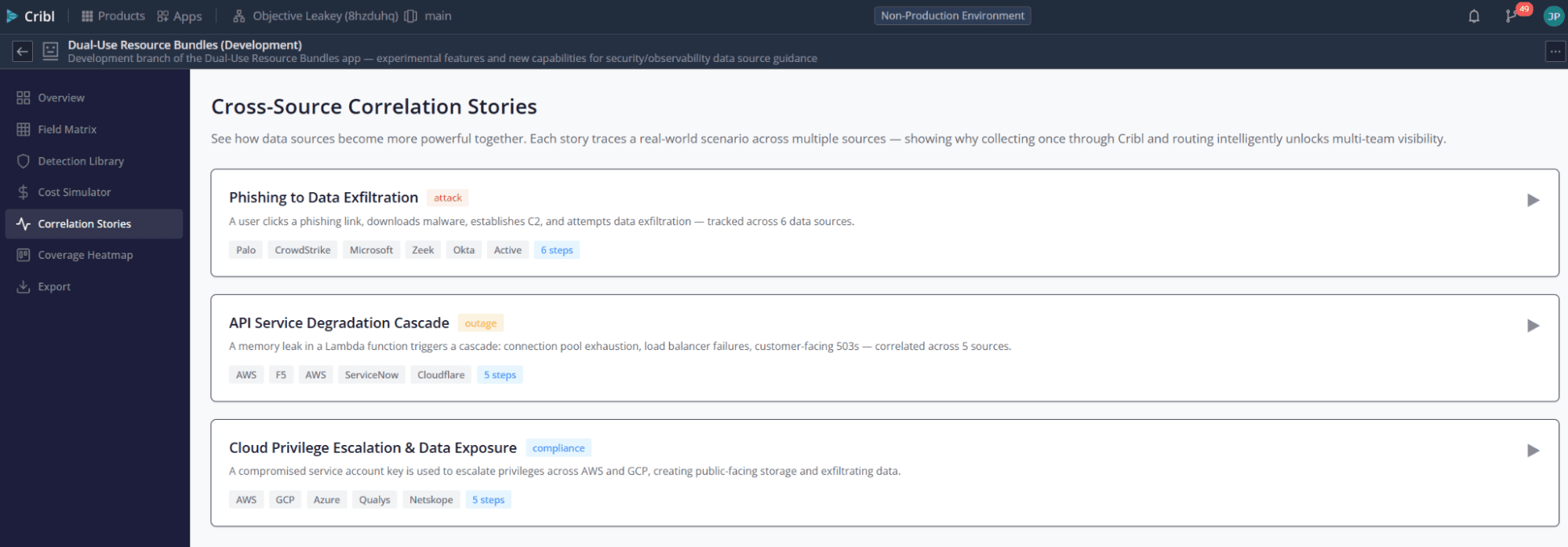
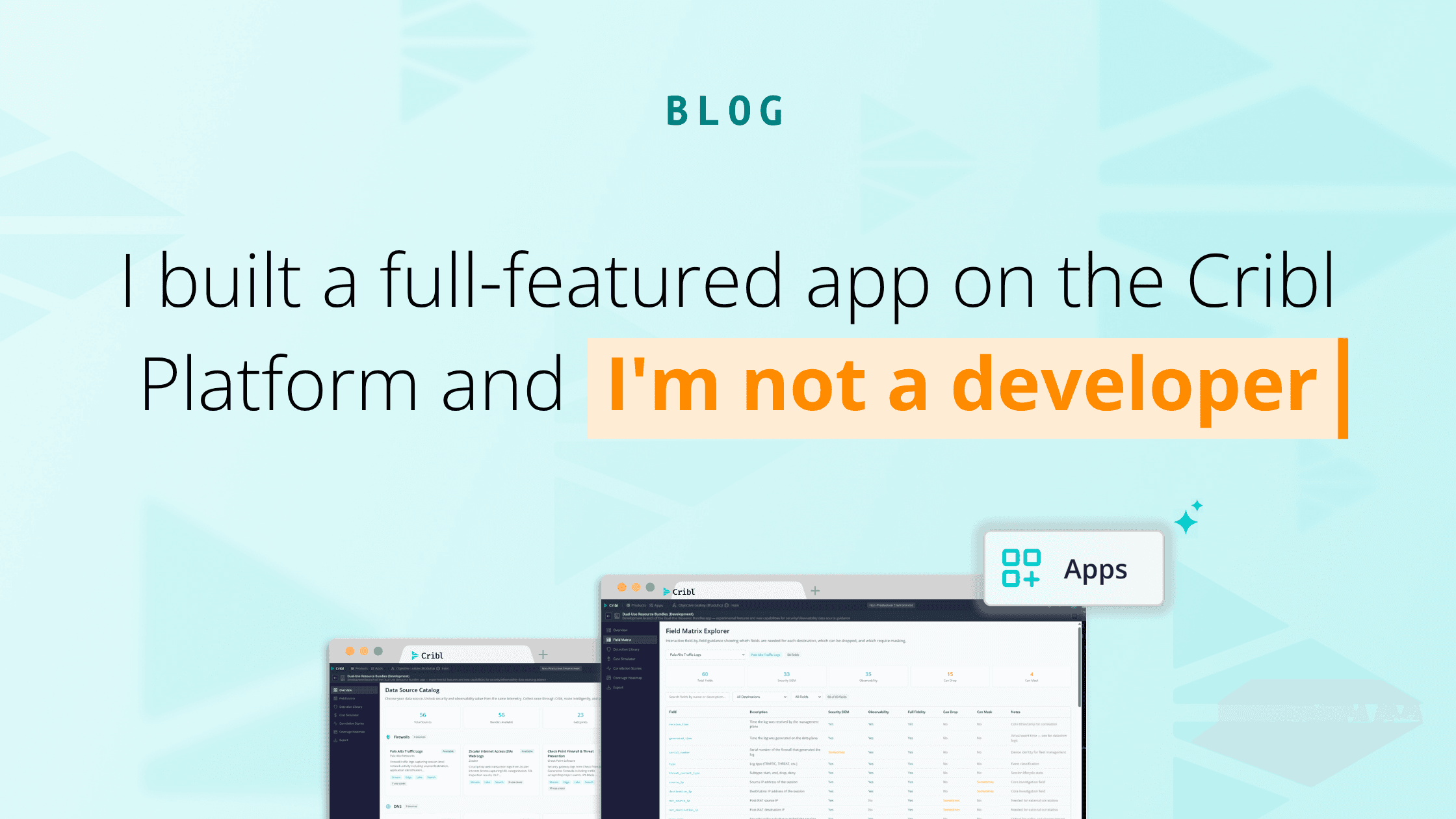
All of that knowledge lived in my head and in scattered documents. I wanted an interactive tool where a customer could browse data sources, pick the detections relevant to their environment, see the field impact, and deploy searches directly into Cribl Search. Something that turned tribal knowledge into a repeatable workflow (a Cribl app!).
On any other platform, that idea would have died in the backlog. I'd need a frontend developer. I'd need a hosting solution. I'd need to wire up RBAC, build an auth flow, and configure an API gateway. The kind of project that goes from "I know exactly what this should do" to six months of infrastructure work before anyone writes a line of business logic.
What actually happened
I described what I needed. The data model. The user flows. The export formats. The detection logic. All the stuff I know cold as someone who lives in security and observability data every day.
The Cribl Platform took care of everything else.
I didn't pick a hosting provider. The app runs inside Cribl Search as a sandboxed iframe. No server to provision. No container to babysit. No DNS records. No TLS certs to rotate. It just lives where my users already work.
I didn't build a login page. The platform injects authentication through its fetch proxy automatically. Every API call my app makes is already authenticated and scoped to the user's permissions. I never stored a token. I never thought about session management. RBAC was already in place because Cribl Cloud already has it.
I didn't configure an API gateway. When my app calls the Cribl Search API to deploy saved searches or create dashboards, the platform proxies those calls transparently. I write a fetch() like it's a local call, and the platform handles routing, auth headers, all of it.
I didn't set up a CI/CD pipeline. npm run deploy builds, packages, uploads, and installs the app. One command, about 30 seconds, and it's live in my Cribl Cloud environment.
What the app actually does
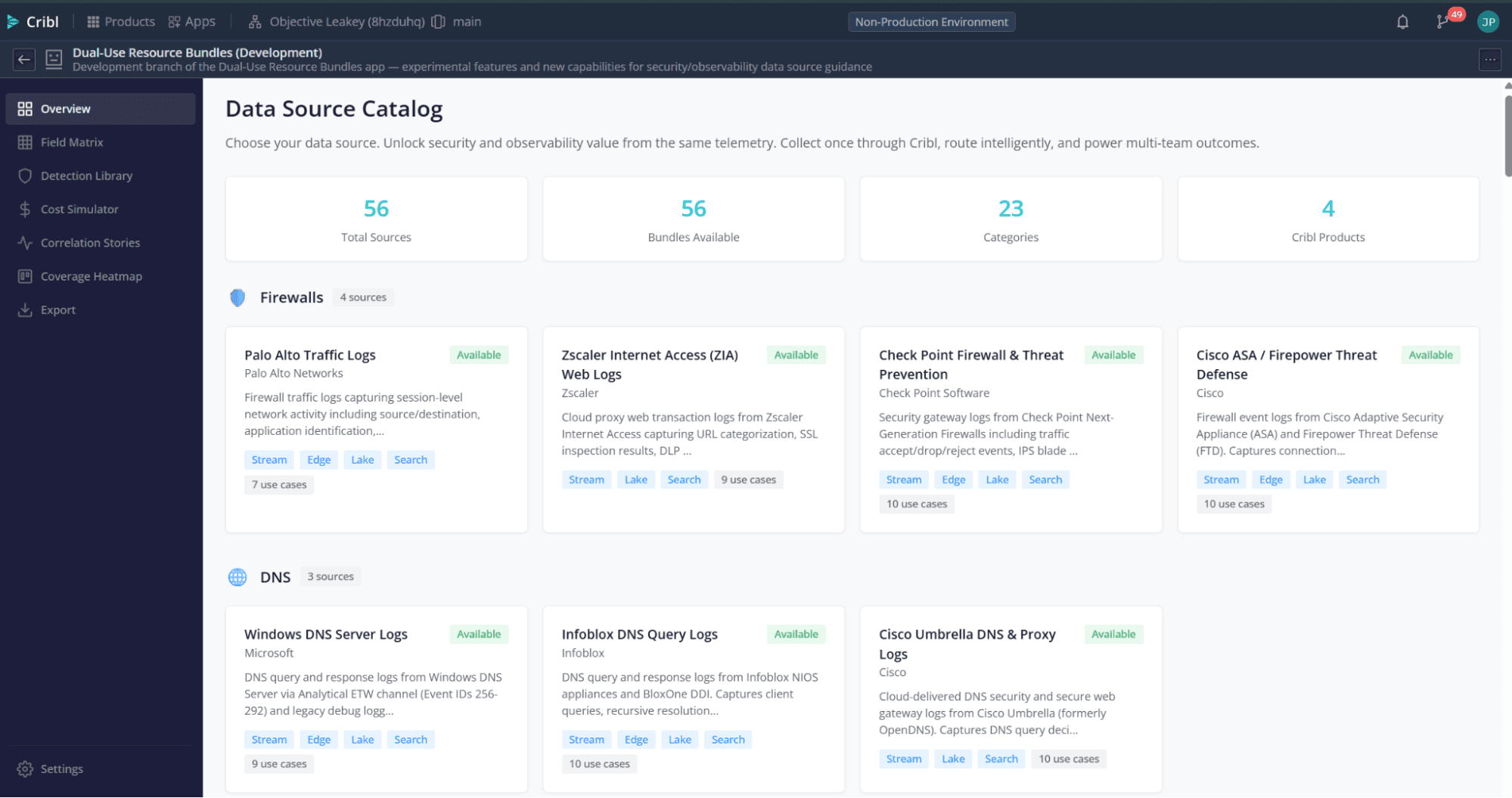
The tool covers 43 data sources across 15 categories (and I am expanding at the speed of thought every day). Each source has:
A field matrix showing which fields serve security vs. observability vs. both
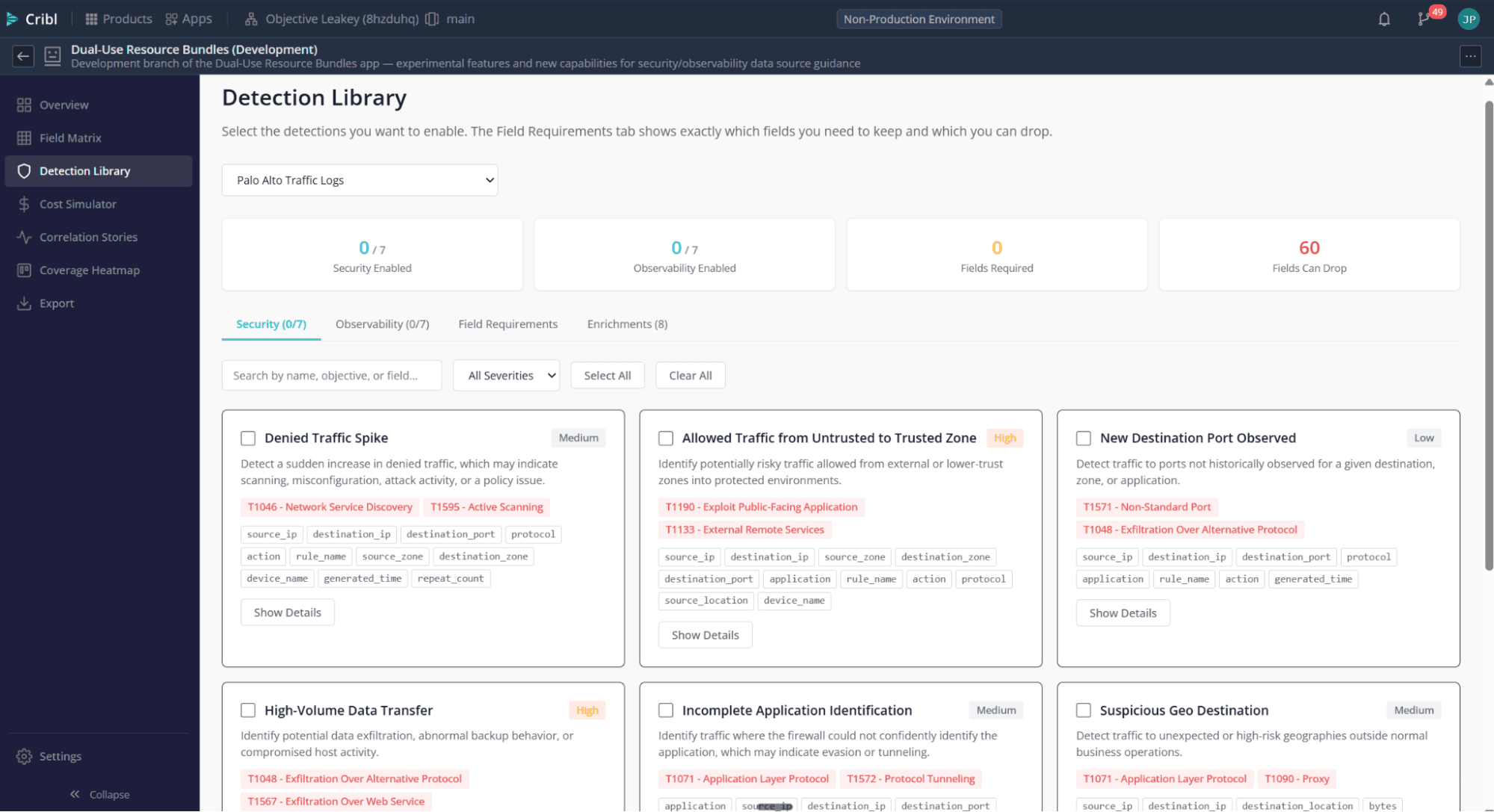
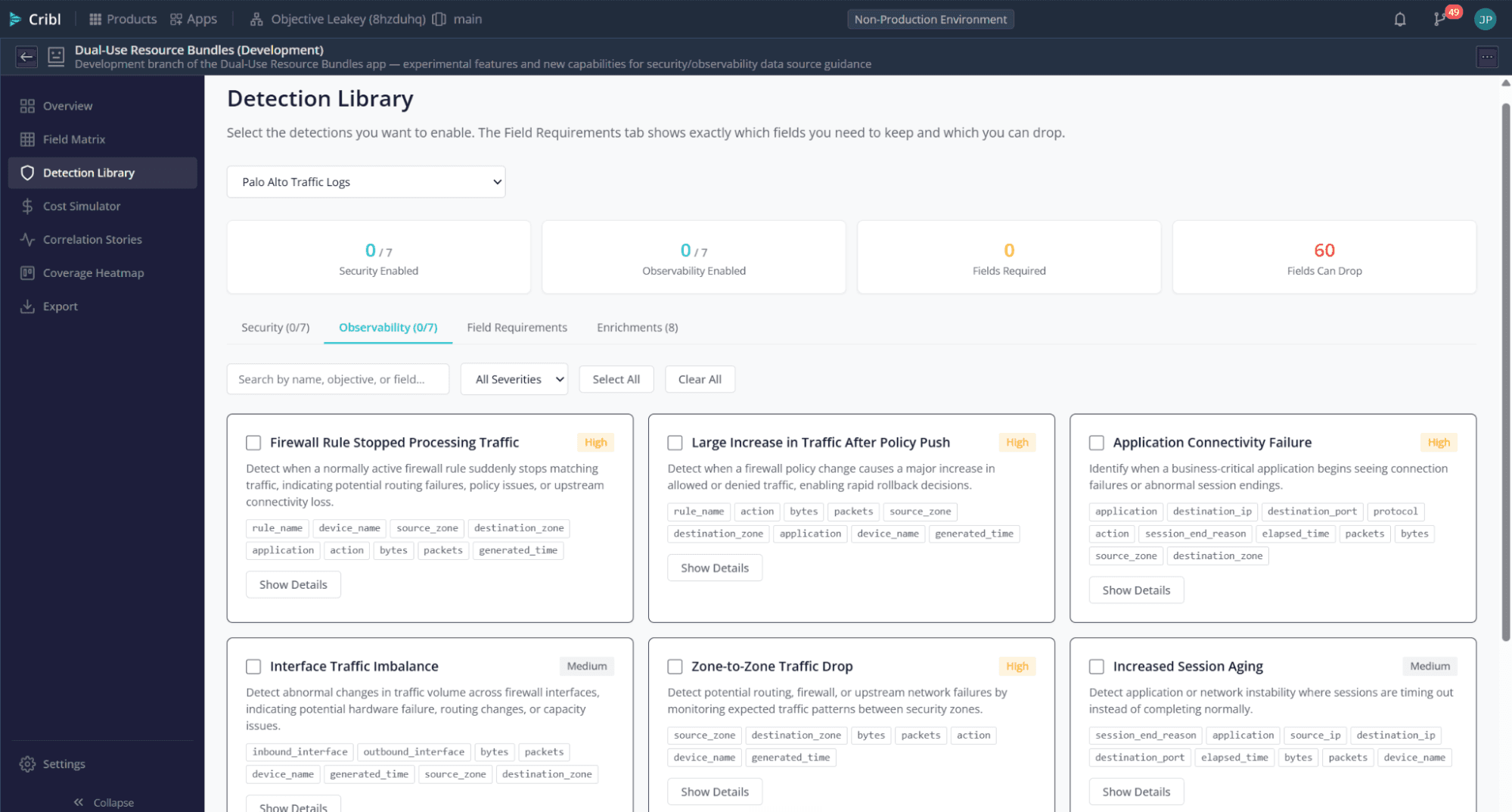
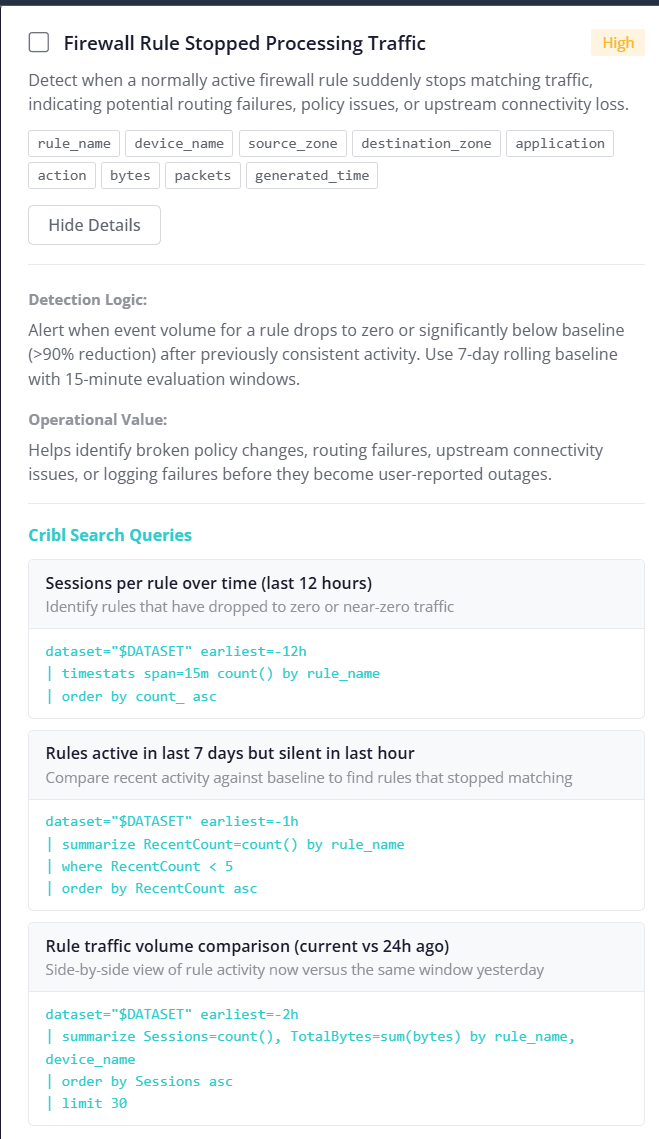
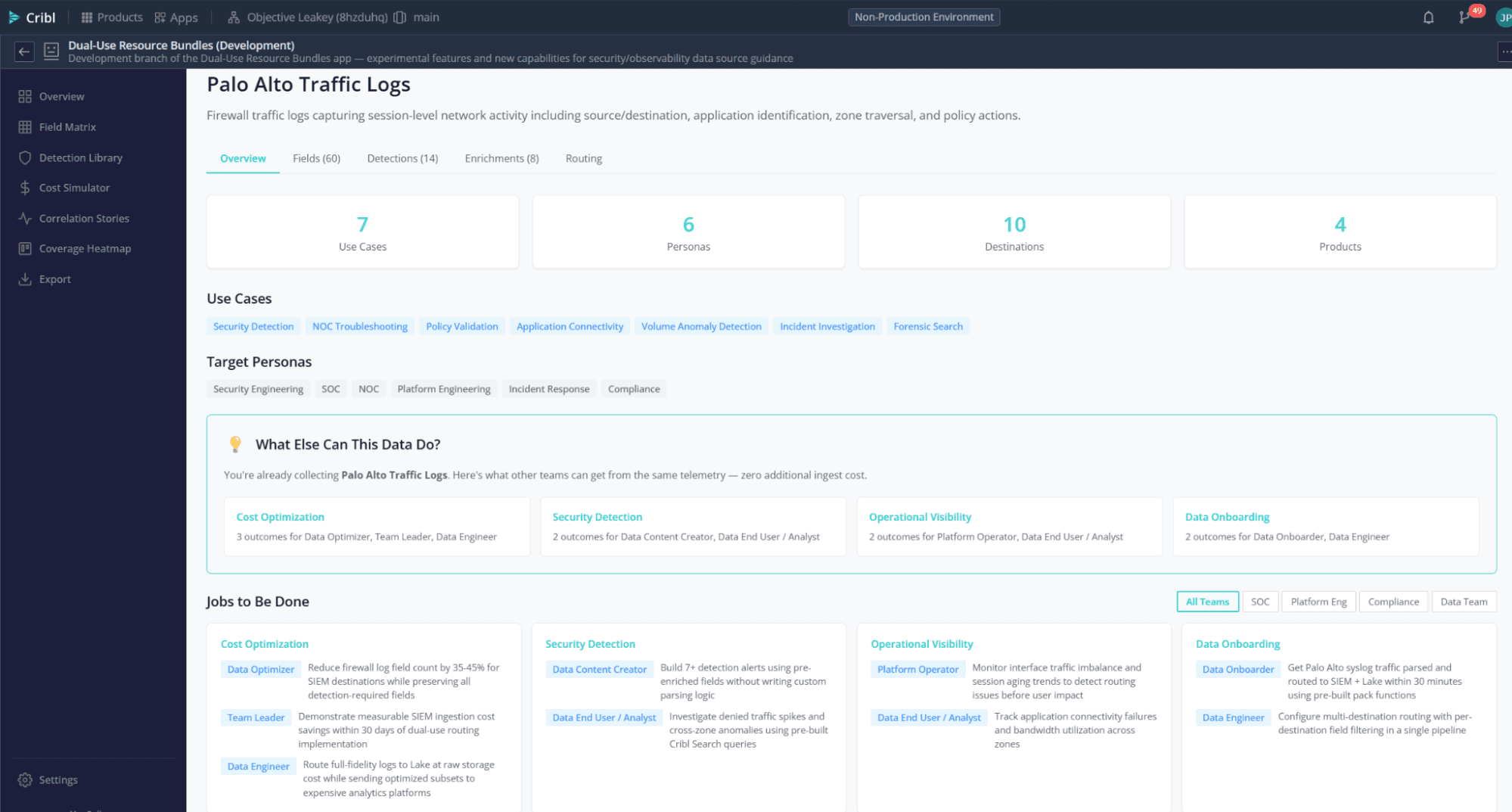
7 security detections and 7 observability detections with full Cribl Search queries
Enrichment recommendations with implementation examples
Routing blueprints for splitting data across multiple destinations
One-click deploy that pushes selected detections as saved searches or dashboards directly into Cribl Search
That adds up to over 600 detections, each with 3-4 KQL queries. All of it browsable, selectable, and deployable without ever leaving the Cribl UI.
Why this matters
I didn't have to become a full-stack developer to ship this. I just had to be a domain expert with a clear picture of what I wanted.
The Cribl Platform got rid of every obstacle that wasn't "know your domain." No infrastructure decisions. No security architecture to design. No hosting bill. No ops work. All the enterprise-grade stuff was already running in my Cribl Cloud environment. I just built on top of it.
If you're a data engineer or a security/observability practitioner sitting on domain knowledge that could help your team or your customers, you're probably closer to shipping something useful than you think. The hard part isn't the platform. The hard part is knowing what to build. And if you already know that, you're mostly done.