
Many teams first adopt Cribl for a familiar reason: they want to reduce telemetry volume, control costs, and get more value from the data they already collect. For many teams, optimization is the starting point, not the end state. As environments grow more complex, they need better ways to onboard data, reduce migration risk, normalize multiple tools, preserve full‑fidelity copies for compliance, and modernize legacy collection layers.
That is why Cribl increasingly becomes the layer that helps teams operate and evolve their telemetry pipeline as architectures change. Whether the challenge is extending Azure-native collection to a third-party SIEM, onboarding SaaS data into Microsoft Sentinel, migrating from an on-prem SIEM to a cloud platform, or turning oversized payloads into usable events, the common value is control. Cribl gives teams a flexible layer to collect, shape, route, retain, and replay data without tying themselves to one vendor or one architecture.
The strongest way to understand that shift is through three capabilities: collect once, shape intelligently, and route and adapt safely.
Collect once
The first step in modern telemetry operations is building on a common telemetry pipeline, so teams don’t have to rebuild collection for every downstream tool. Cribl has become that shared collection layer in a wide range of environments.
A good example is Azure-native collection. Many Azure-first organizations already use Azure Managed Agent and Data Collection Rules to move logs from Windows and Linux virtual machines into Event Hubs. That model works well when the primary destination is Microsoft Sentinel. But many of those same environments also need to send the same telemetry to other platforms such as Exabeam, Splunk Cloud, CrowdStrike NG-SIEM, Palo Alto XSIAM, or Google SecOps. Instead of forcing every downstream platform to deal with raw source data in its own way, teams can bring Azure Event Hubs data into Cribl and establish a collection point that is no longer tied to a single analytics destination.
Figure 1 below shows the Azure Event Hubs source configuration that often serves as the starting point for this model.
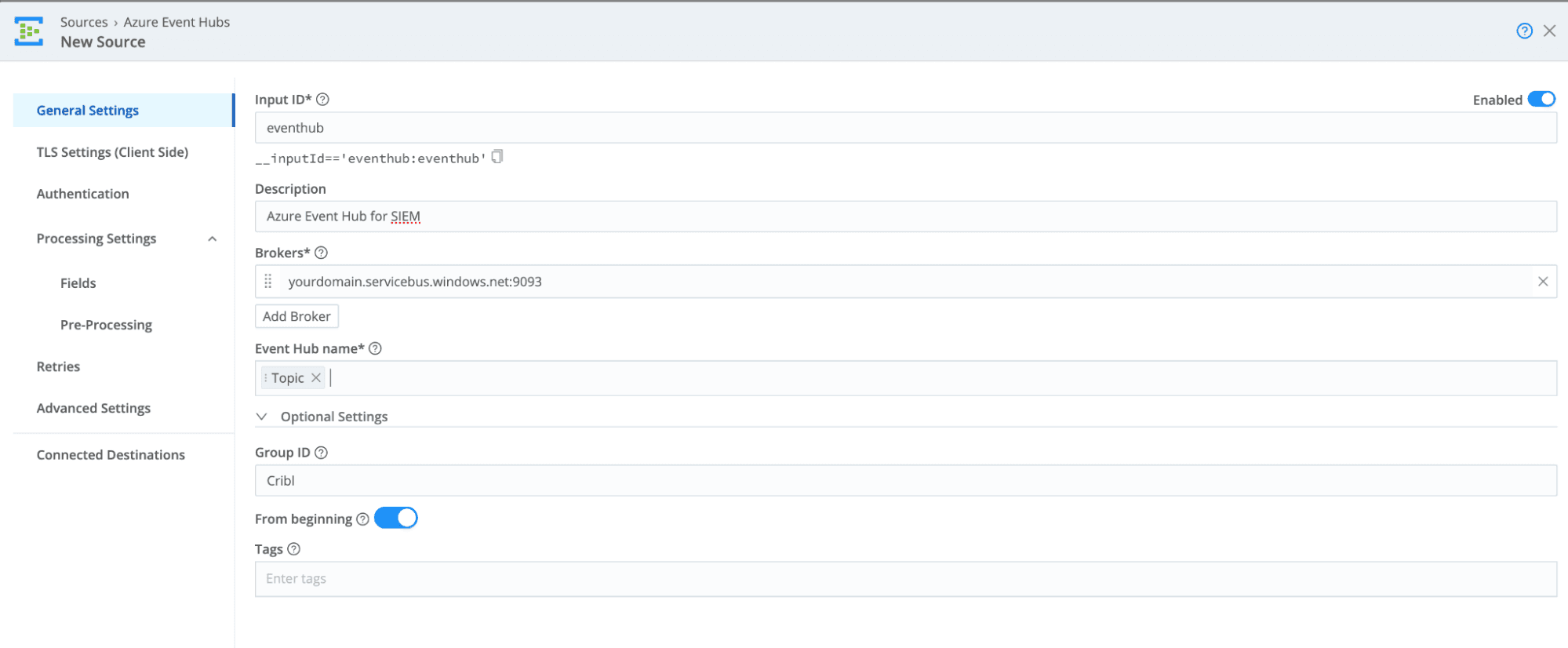
Figure 1: Azure Event Hubs source configuration in Cribl before transformation and routing.
The same pattern appears in SaaS and API-driven environments. In one deployment, Cribl acted as the central collector for sources such as Salesforce and SAP HANA, pulling data through REST APIs before any downstream mapping or routing decisions were applied. That matters because it separates collection from analytics. Teams are no longer forced to redesign ingestion every time a new SaaS platform or security tool enters the stack.
Figure 2 shows Cribl’s built-in Wiz integration, which illustrates how teams can ingest security and SaaS telemetry through a common collection layer instead of managing each source as a separate one-off pipeline.
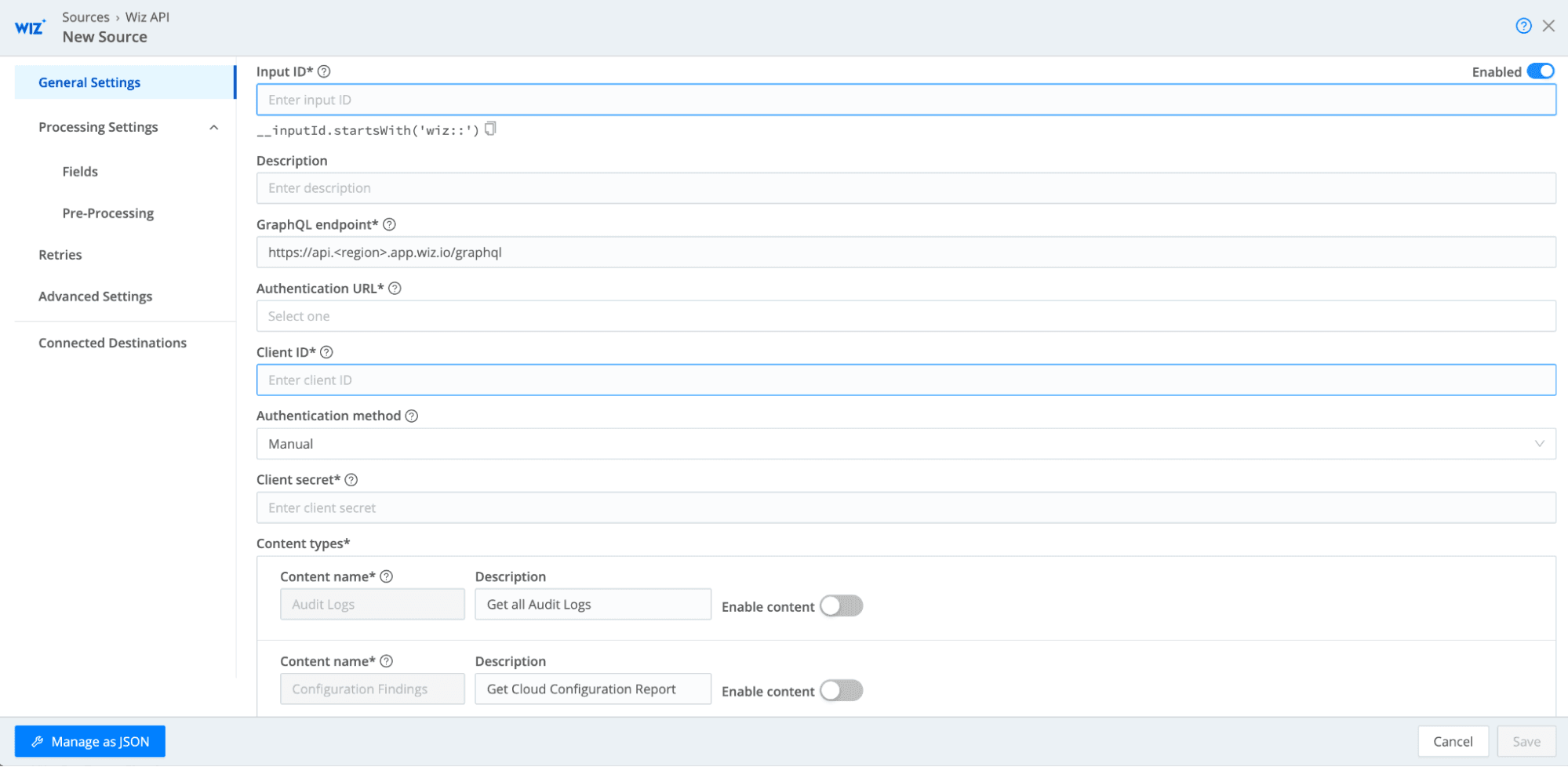
Figure 2: Built-in Wiz source configuration in Cribl for ingesting security telemetry through a shared collection layer.
This also explains why more teams are replacing brittle legacy collectors with Cribl. Customers are moving away from syslog servers, Logstash, and heavy forwarders not just to consolidate tooling, but to simplify how unstructured telemetry is collected, tested, transformed, and distributed across multiple destinations. In practice, they are using Cribl to ingest raw syslog from firewalls, virtual machine estates, and load balancers, then validate changes against real sample data before pushing those changes into live pipelines.
Collecting once is the foundation. Once that common layer exists, the next challenge is making the data useful everywhere it needs to go.
Shape intelligently
Telemetry value is rarely determined at collection time alone. The real operational leverage comes from shaping data before it reaches the platforms that store, search, or analyze it.
That is especially clear in environments where teams are bringing third-party data into Microsoft Sentinel. In one example, Cribl transformed raw JSON from SaaS sources and mapped it into the specific Log Analytics tables that Sentinel expects. Instead of pushing every format mismatch and schema change into downstream analytics logic, teams used Cribl as the place to normalize data once and send the correct shape onward.
This approach becomes more valuable as SaaS and security platforms evolve. Vendors add or modify fields frequently, and those changes can break downstream analytics or make them expensive to maintain. Customers found it easier to absorb that change in Cribl than in Data Collection Rule logic, while also reducing ingestion and search costs in Sentinel’s Log Analytics layer.
Figure 3 shows the kind of field extraction and transformation stage that sits between collection and destination, where teams can shape telemetry into something cleaner, lighter, and more useful before it moves downstream.
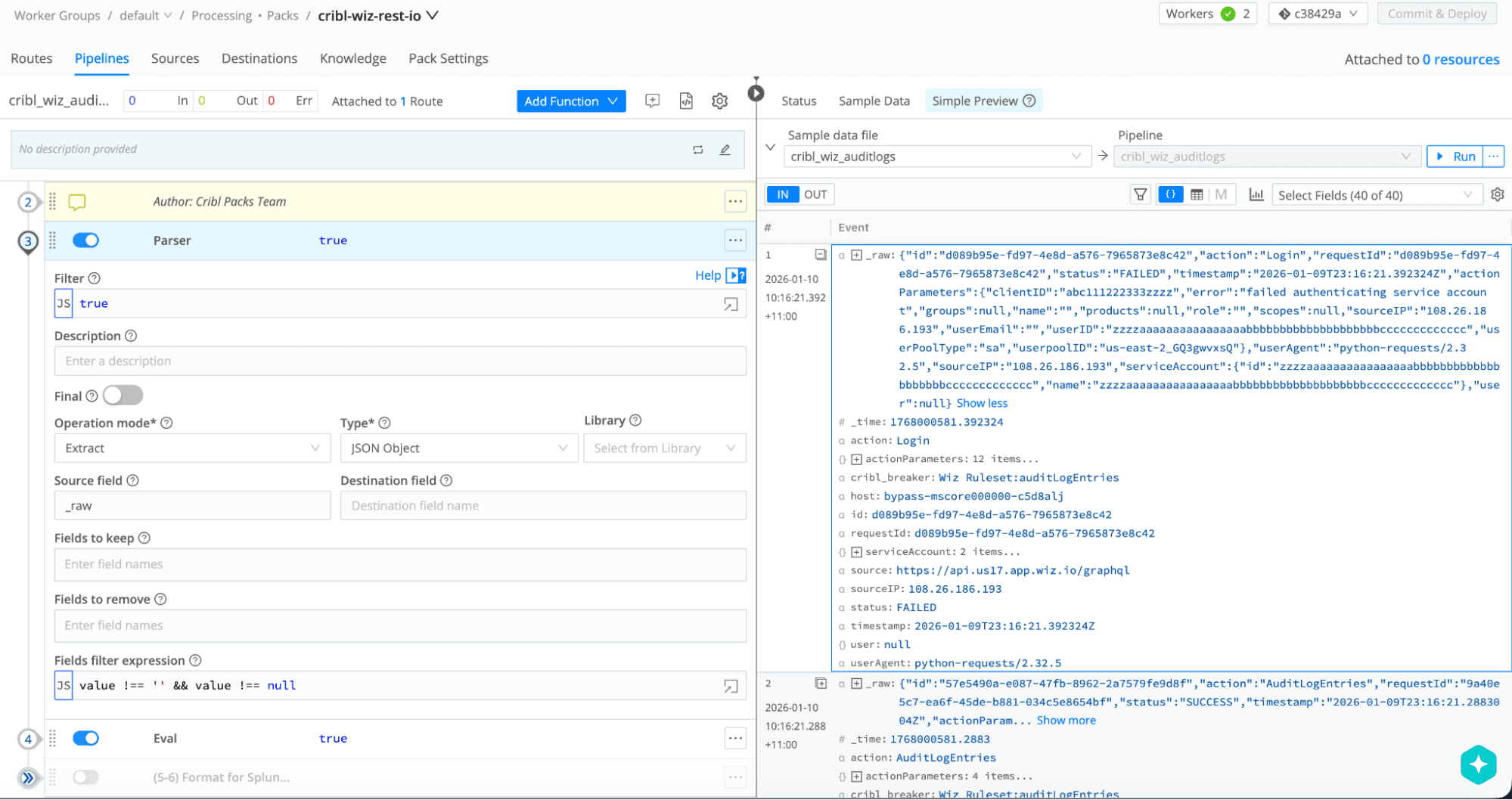
Figure 3: Example of field extraction and transformation in Cribl before forwarding data to the destination platform.
Shaping intelligently is not only about schemas. It is also about event fidelity. Some business and security systems emit large bundled payloads where multiple events arrive inside arrays, often with timestamps that are not useful at the individual event level. That makes downstream alerting and investigation harder than it needs to be.
Cribl’s Unroll function addresses that directly by splitting large arrays into individual events and preserving the correct timestamps for each one. The result is cleaner, investigation-ready data for downstream SIEMs and fewer false alerts caused by poorly shaped payloads.
Figure 4 shows the kind of transformation logic used to break composite payloads into usable events before they are forwarded downstream.
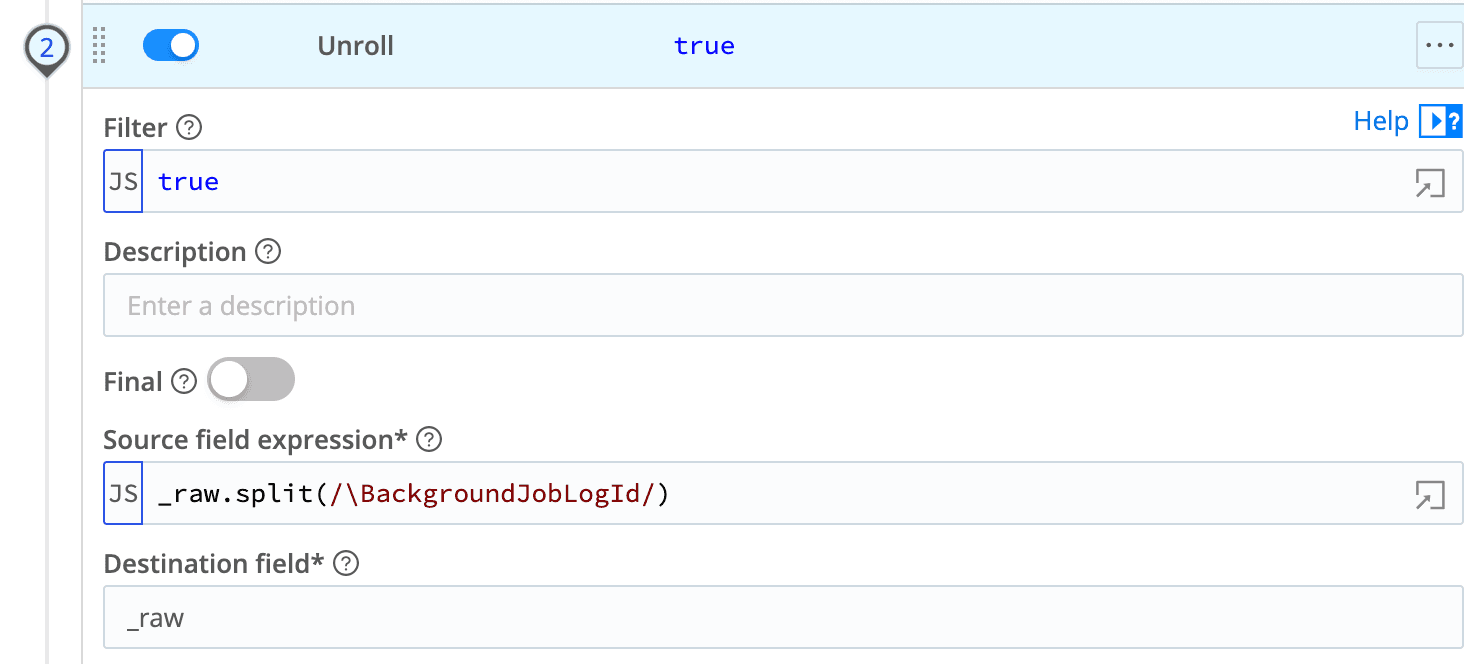
Figure 4: Example transformation logic used to split large payloads into individual events before forwarding them downstream.
Once data is collected and shaped correctly, the last layer of value is what teams can do with it operationally.
Route and adapt safely
Routing is where the control-plane argument becomes most visible. When teams can deliver the right version of data to the right destination, keep full-fidelity copies when needed, and move through platform transitions without disruption, Cribl becomes more than a transformation engine. It becomes the layer that makes architectural change manageable.
In the Azure-native scenario, teams can transform data once in Cribl and route only the required fields to each destination platform. That has helped customers onboard additional virtual machine data faster, shape security logs before they reach the SIEM, and reduce egress and processing overhead along the way. The operational benefit is not simply flexibility; it is a cleaner multi-destination model that avoids duplicating transformation logic across every downstream tool.
The same theme appears in compliance and long-term retention. In the SaaS-to-Sentinel example, the customer also sent a full-fidelity copy of the same data to Azure Blob Storage for long-term compliance and investigations. That is important because it separates the analytics-ready version of the data from the retained version. Teams can shape what they need for operational use without giving up raw fidelity for compliance, audit, or later investigation.
This is also why Cribl shows up so often in SIEM migrations. Moving from an on-prem SIEM to a cloud SIEM is not just a destination swap. Teams need to preserve visibility, avoid data loss, and make sure the new platform is ready before cutover. In one case, a customer used Cribl as a migration broker in a dual-forwarding setup, sending traffic to both the legacy SIEM and the new cloud SIEM over a 60-day period. That allowed the new environment to be populated before cutover while avoiding the cost and disruption of a manual indexer migration.
Cribl also provided operational guardrails during the transition. The customer used HEC with TLS compression to reduce data sent over the wire, script-based heartbeat logs to monitor forwarding health, persistent queues to absorb interruptions, and internal metrics and dashboards to watch delivery performance in real time. The result was a lower-risk migration path that protected user experience while giving operators early warning when something needed attention.
That is the larger point. Cribl is not just helping teams reduce telemetry volume. It is helping them create a controlled transition layer between the old environment and the new one.
Growing beyond optimization
Teams often start with Cribl as a way to optimize telemetry costs, but the stronger framing is that Cribl helps them grow beyond optimization into flexible telemetry operations. It helps organizations collect once, shape data intelligently, route it to the right tools, retain full-fidelity copies when required, and adapt through migrations or architecture changes without rebuilding everything around a single vendor or destination.
Optimization is still part of the story. But the more durable value is control: control over how telemetry is onboarded, how it is normalized, where it goes, how long it is retained, and how quickly teams can respond when vendors, compliance requirements, or operating models change. That’s why many customers start with Cribl to reduce cost, then expand its role once they realize it can simplify far more than they expected.